

Mold remediation vs. mold removal: what’s the difference?
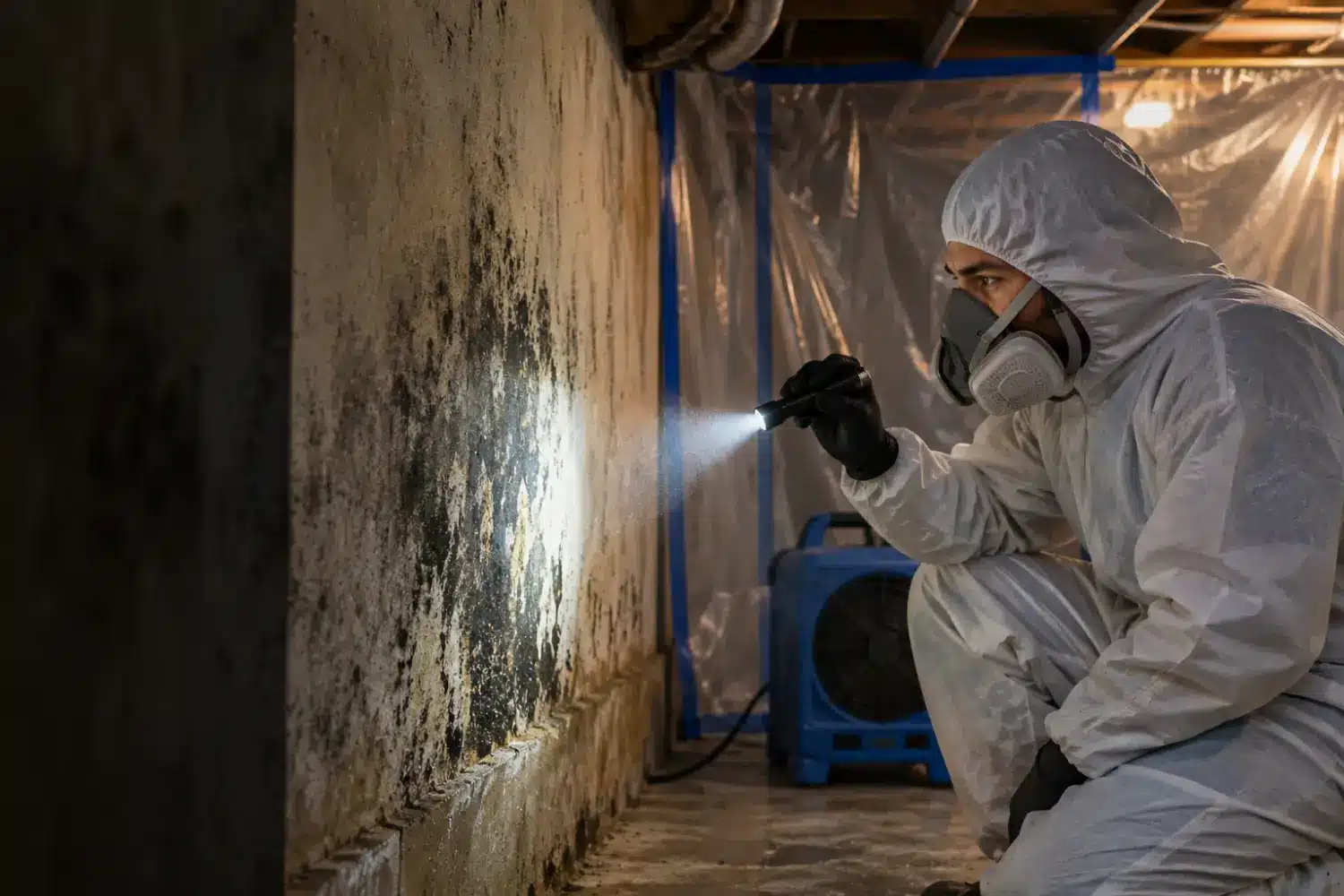
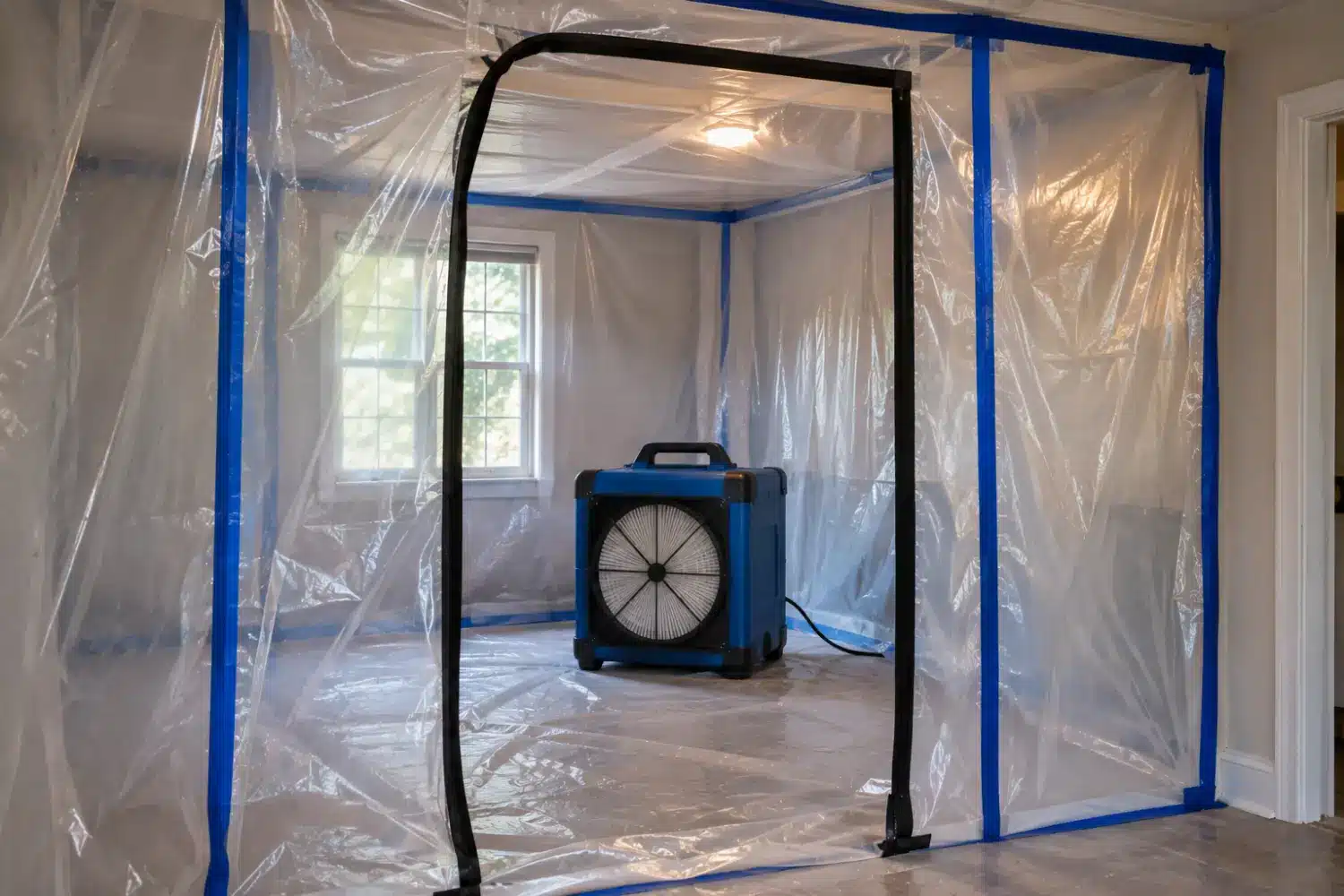
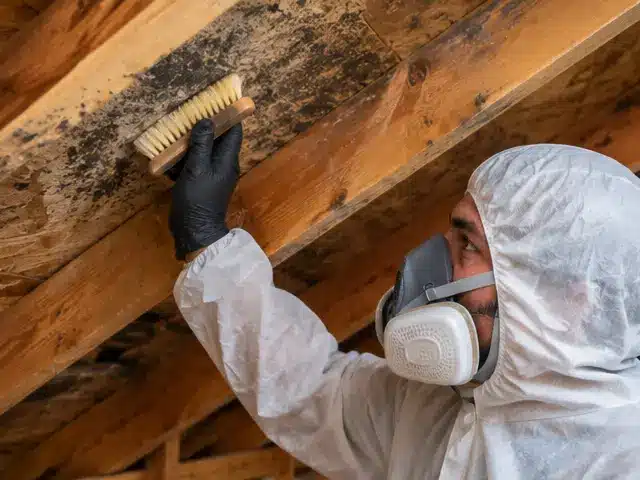
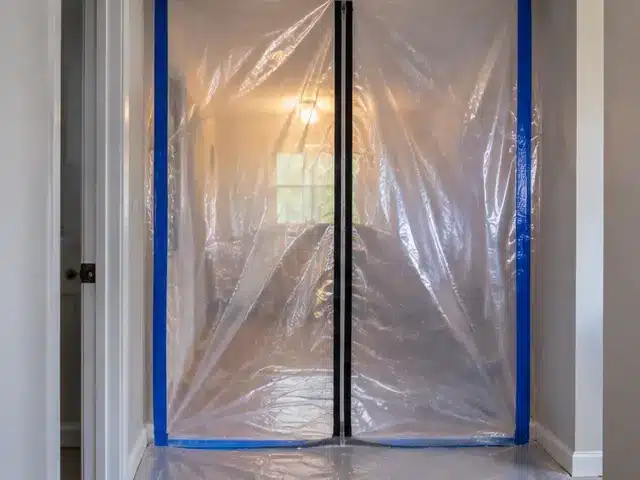
Mold removal means cleaning or cutting out the mold you can see. Mold remediation is the complete job: finding all of the growth (including hidden mold), sealing off the area so spores don’t spread, removing and cleaning affected materials, filtering the air, and correcting the moisture source. Removal alone often fails because mold grows back wherever the moisture remains. That’s why every mold job we do is a remediation job, whether you call it removal, cleanup or abatement.
Why mold is so common in Seattle homes
Western Washington’s long, wet season keeps building materials damp for months. Add cool indoor surfaces in winter and many older homes with vented crawl spaces, and mold has what it needs. The places we find it most often:
- Crawl spaces: wet soil, missing or torn vapor barriers, and damp insulation under the floor.
- Attics: roof leaks, poor ventilation, and bathroom or kitchen fans that vent into the attic instead of outside.
- Bathrooms and laundry rooms: daily humidity with weak exhaust.
- Basements: seepage after heavy rain, and leftover moisture from past leaks or floods.
- Around windows: winter condensation that soaks sills and frames.
- Behind walls and under floors: slow plumbing leaks that nobody sees until the smell or stains appear.
Signs you may need mold remediation
- A musty, earthy smell that won’t go away
- Black, green or white spots on walls, ceilings, wood or insulation
- Peeling paint, warped flooring or stained drywall after a leak
- Condensation that keeps forming on windows and walls
- Allergy-like symptoms that ease when you leave the building
- Any water leak or flooding that wasn’t dried within 24–48 hours
When to call a professional
Small spots on a hard surface, like a few square inches of mildew on bathroom grout, can usually be cleaned by the homeowner. Call a professional when:
- The affected area is larger than about 10 square feet. Environmental health guidance recommends a remediation contractor above that size.
- The mold is inside walls, under floors, in HVAC ducts or in the crawl space.
- The growth followed a sewage backup or floodwater.
- Someone in the home has asthma, allergies or a weakened immune system.
- You need documentation for an insurance claim, a sale, or a landlord-tenant situation.
Homes and businesses
We handle mold in houses, condos, apartments and rentals, and in commercial properties: offices, retail stores, restaurants, schools and warehouses. For businesses, we plan containment and work hours around your operations to keep downtime low. Most projects take 1–5 days, depending on the size of the affected area.
Does insurance cover mold remediation?
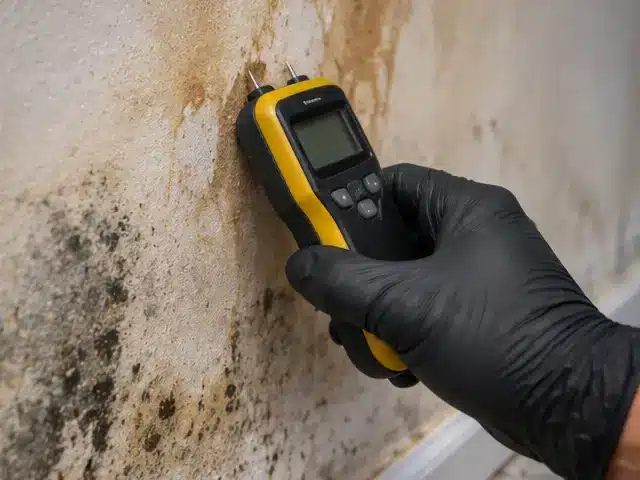
It depends on the cause. Mold that results from a sudden, covered event, such as a burst pipe, is often covered as part of that water damage claim. Mold from long-term leaks, humidity or poor maintenance often is not. We document the damage with photos and moisture readings and work directly with most major insurance companies.
Mold usually starts with water: for an active leak or flooding, see our water damage restoration service first. Mold under the house is covered by our crawl space cleaning service, and lingering odors by our sanitization services. We provide mold remediation throughout Seattle, Federal Way, Kent, Tacoma, SeaTac and nearby communities.
Emergency Mold Remediation: When Mold Can’t Wait
Most mold problems develop over weeks, but some situations need a fast response. Call us right away, 24/7, if:
- Mold appeared after a leak, flood or sewage backup. The water source has to be stopped and the structure dried before mold spreads further. Materials that stay wet longer than 24–48 hours start to grow mold.
- Someone in the home has asthma, allergies, a weak immune system, or is very young or elderly and the mold is in living space. Talk to a doctor about health concerns; we deal with the source.
- Mold covers a large area, roughly more than 10 square feet, or is spreading quickly.
- You’re selling or buying a home and an inspection found mold in the crawl space or attic, with a closing date coming up.
- A rental unit or commercial space has mold that affects tenants, customers or staff.
In an emergency, we stop the moisture source, set up containment and HEPA air filtration to keep spores from spreading, and start drying. Removal and cleaning follow, then we confirm the moisture problem is fixed so the mold doesn’t come back. Call (206) 203-6155.
Mold remediation across the Seattle area
We provide mold inspection, remediation and removal in Seattle, Tacoma, Auburn, Lakewood, Kent, Renton, Federal Way, Puyallup and the rest of King and Pierce County.
More questions about mold
Why is mold so common in Seattle homes?
Seattle’s long wet season, high humidity and many homes with vented crawl spaces keep materials damp for months, especially in crawl spaces, attics, bathrooms and basements.
Is mold dangerous?
Mold can cause allergic reactions, respiratory irritation and other health problems, especially for people with asthma or weakened immune systems. If you have health concerns, talk to your doctor.
Do you offer mold testing?
Yes. We provide air-quality testing before remediation when needed, and post-remediation testing to confirm the area is clean.