

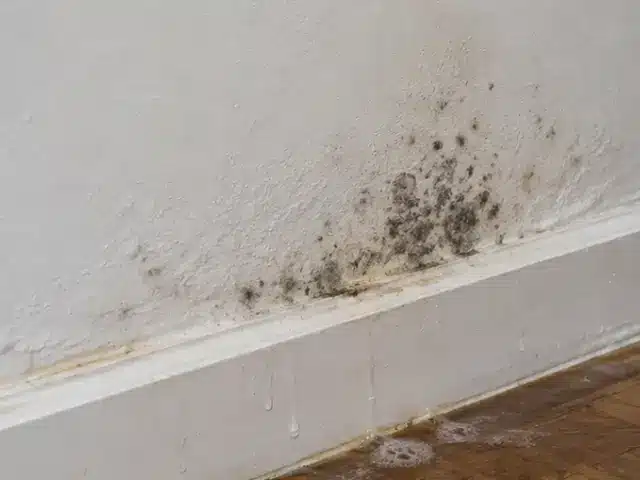
Water left for more than a day or two can lead to mold, so we also offer mold remediation. If the water came from a sewer or toilet backup, see our sewage backup cleanup service. For businesses, see commercial water damage restoration, and we also clean and dry flooded crawl spaces. We respond across Seattle, Federal Way, Kent and Tacoma.
Water Damage Restoration and Repair in Seattle, WA
Water damage restoration is more than removing the water you can see. Water runs under flooring, wicks up drywall, soaks insulation and drips into the floor below, and anything left wet for more than 24–48 hours can start to grow mold. Our job is to find all of it, get it out, dry the structure completely, and repair what was damaged. 911 Restoration Seattle provides emergency water removal and water damage repair 24/7 across Seattle and King and Pierce County, with an average response time of 45 minutes. Call (206) 203-6155.
Common causes of water damage in Seattle homes
- Burst and frozen pipes. Seattle’s cold snaps are short, but pipes in crawl spaces, exterior walls and garages freeze and split when the temperature drops below freezing for a night or two. See how to prevent frozen and burst pipes.
- Water heaters, washing machines and dishwashers. Old tanks, cracked supply hoses and failed fittings can release gallons of water an hour until someone notices.
- Toilet, sink and supply line leaks, often hidden inside a cabinet or wall.
- Roof and window leaks during atmospheric river storms and wind-driven rain.
- Flooded basements from groundwater, window wells, failed sump pumps and floor drains. See what to do when your basement or crawl space floods.
- Wet crawl spaces, where standing water soaks insulation and raises humidity in the whole house. See crawl space cleaning.
- Sewer backups, which need sewage cleanup and disinfection, not just drying.
Clean, gray and black water: why it matters
Restoration follows industry categories that describe how contaminated the water is, and the category decides what can be saved:
- Category 1, clean water, from a supply line, faucet or rain. Most materials can be dried in place if we start quickly.
- Category 2, gray water, from a washing machine, dishwasher or a toilet overflow without feces. It needs cleaning and treatment along with drying.
- Category 3, black water, from sewage or flooding from outside. Porous materials it touched, such as carpet, pad, drywall and insulation, usually have to be removed, and the area disinfected.
Clean water doesn’t stay clean. After a day or two, especially in a warm house, it can turn into a higher category, which is another reason speed matters.
Signs of hidden water damage
- Stains or discoloration on ceilings and walls
- Bubbling or peeling paint, or wallpaper coming loose
- Soft, warped or cupping floors, and swollen baseboards
- A musty smell, especially in basements, closets or under sinks
- A water bill that goes up without explanation
Our water damage restoration process
- Inspection and moisture mapping. We find the source, then use moisture meters and other moisture detection tools to map exactly where the water went, including inside walls, under floors and in the rooms below.
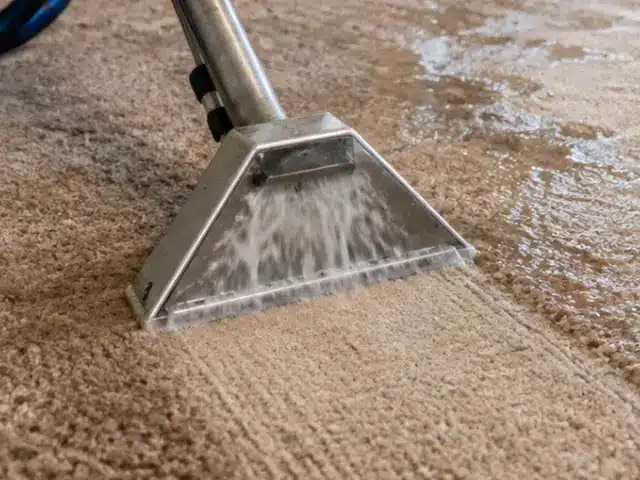
- Emergency water removal. High-capacity pumps and extractors remove standing water and as much water as possible from carpet and pad.
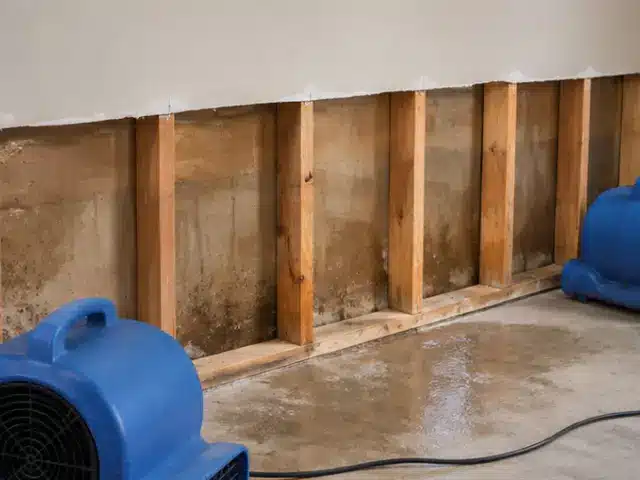
- Removing what can’t be saved. Materials that are contaminated or can’t be dried, such as wet carpet pad, saturated drywall or insulation, are removed and documented.
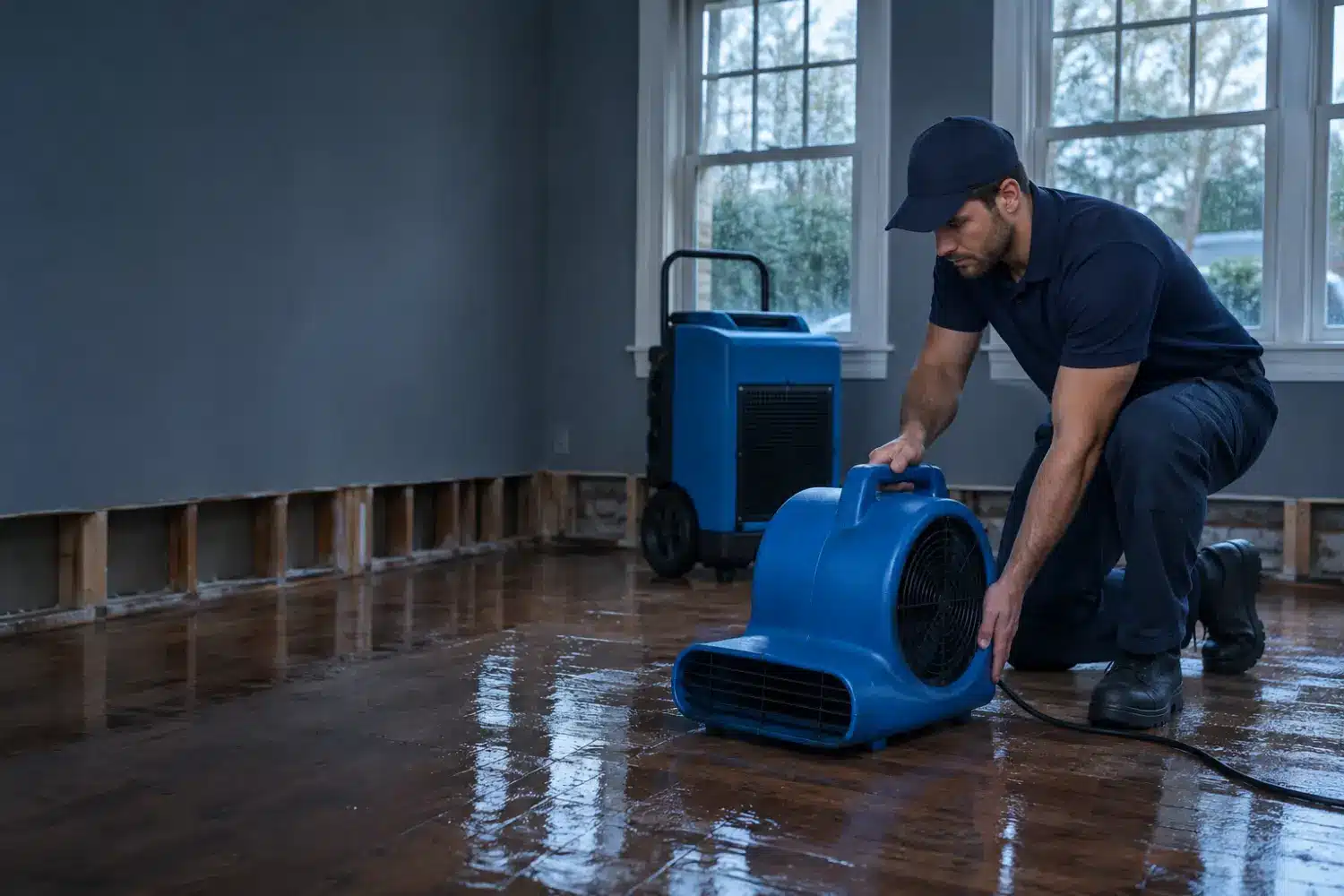
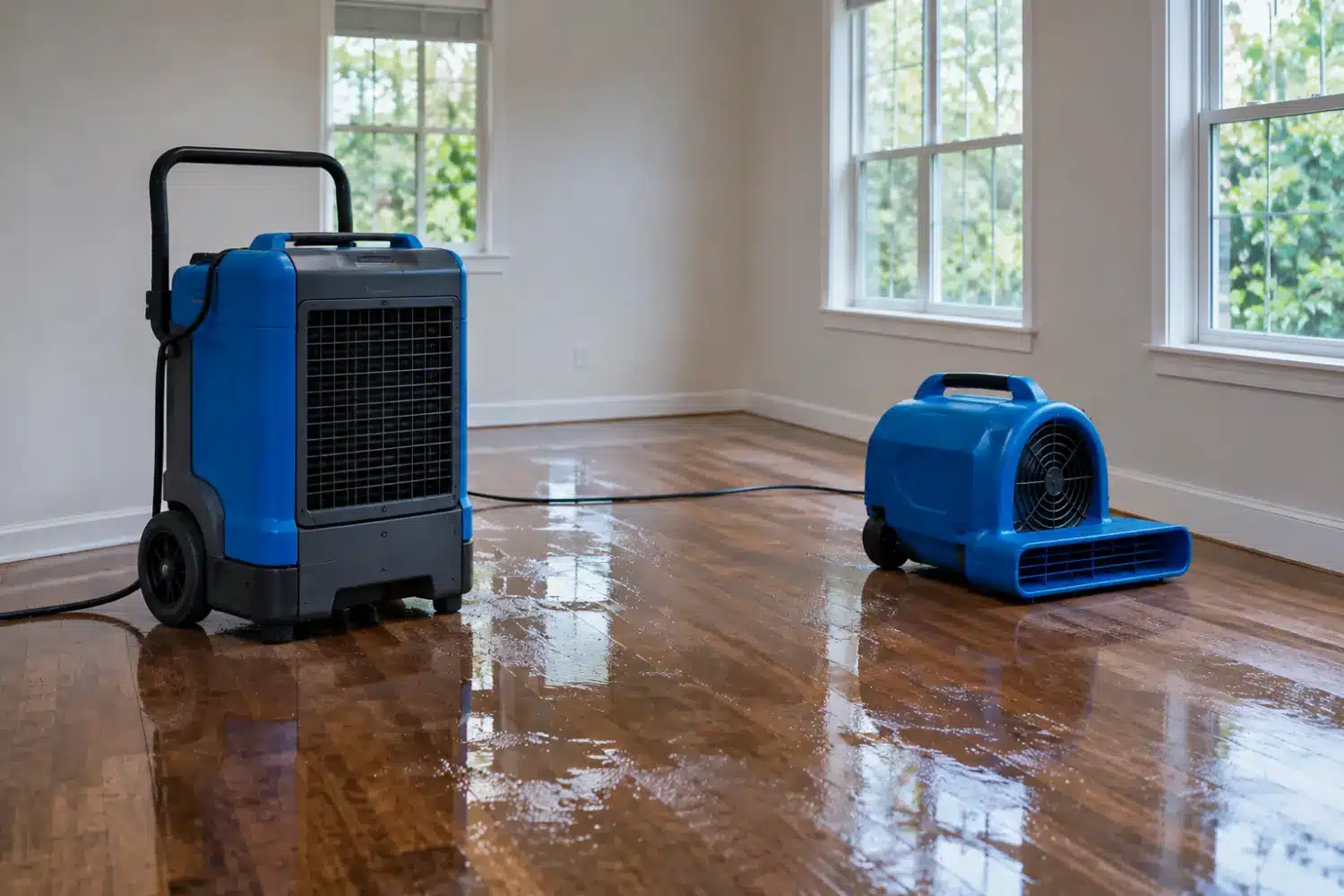
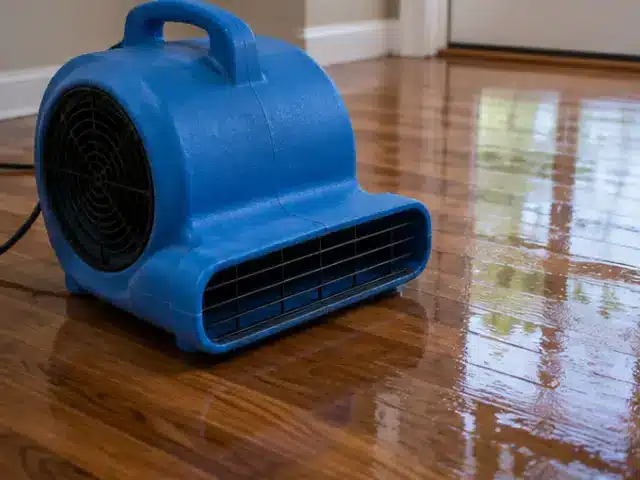
- Structural drying. Commercial dehumidifiers and air movers dry the building itself, not just the surfaces. We take moisture readings every day and adjust the equipment until materials are back to normal.
- Cleaning and treatment. Affected areas are cleaned, and treated where needed to prevent mold and odor.
- Repairs. We replace drywall, flooring, baseboards and cabinets and finish the paint, so the room is back to how it was.
How long does water damage restoration take?
Drying usually takes several days, depending on how much water there was, how long it sat and the materials involved: hardwood and plaster take longer than drywall and carpet. Repairs come after the structure is dry and depend on how much had to be removed. We give you a timeline after the inspection and update it as the daily readings come in.
What does water damage restoration cost?
The price depends on the type of water, the area and materials that got wet, how long the water sat and how much needs to be repaired. We provide free estimates. For typical national price ranges and what drives them, see our water damage restoration cost guide.
Water damage and insurance
Sudden and accidental water from inside the house, such as a burst pipe or failed water heater, is often covered by homeowners insurance, minus the deductible. Flooding from outside usually needs separate flood insurance, and sewer backup usually needs an add-on to the policy. We document every job with photos, moisture readings and an itemized scope, and we work with most major insurance companies. For more detail, see does homeowners insurance cover water damage in Washington?
Flooded basement cleanup in Seattle
Basements are where many Seattle water losses end up. We pump out the water, remove wet carpet, pad and drywall where needed, dry the concrete and framing, and clean and disinfect if the water came from outside or from a drain. If the basement floods often, we’ll point out the likely causes, such as grading, downspouts, a failed sump pump or a floor drain without a backwater valve, so you can fix them.