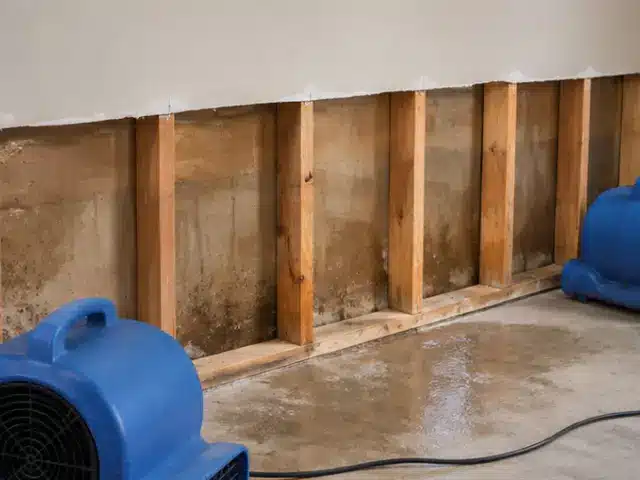
In Washington, a standard homeowners policy usually covers water damage that is sudden and accidental, such as a burst supply line, a failed ice-maker line or a dishwasher overflow. It usually does not cover damage that built up gradually, flooding from outside, or a sewer backup unless you added that coverage. That is the general rule described by the Washington State Office of the Insurance Commissioner (OIC). Your own policy decides the answer, so read the coverage and exclusions sections and ask your agent when in doubt. Below is how each common situation is usually treated, and how to document a claim.
This article is general information, not legal or insurance advice. Coverage depends on your policy and your insurer.
Quick answer: what’s usually covered and what isn’t
| Situation | Usually covered by a standard homeowners policy? |
|---|---|
| Burst or broken supply line, failed appliance hose, water heater that suddenly fails | Usually yes (sudden and accidental) |
| Frozen pipe that bursts | Usually yes, if the home was kept heated |
| Slow leak under a sink or behind a wall that went on for weeks | Usually no (treated as maintenance) |
| Groundwater seepage or cracks in the foundation | Usually no |
| Flooding from a river, storm runoff or rising water | No; needs a separate flood policy |
| Sewer or drain backup | Usually no, unless you added a sewer backup endorsement |
| Mold | Often limited; may be covered only when it results from a covered loss such as a burst pipe |
Sources: Washington OIC, Leaks, water damage, and mold; Washington OIC, Flood insurance; Insurance Information Institute.
Sudden and accidental vs. gradual damage
This is the distinction that decides most water claims. The OIC explains that leaks which happen suddenly and accidentally, like a burst supply line or an overflowing dishwasher, are usually covered. Damage that develops over time, such as slow drips, seepage through foundation or wall cracks, or a leak that went on for more than a couple of days, is usually treated as a maintenance problem and excluded, even if you didn’t know about it.
The Insurance Information Institute describes the same idea: common homeowners forms (HO-2, HO-3, HO-4 and HO-6) cover accidental discharge or overflow of water from plumbing, heating and air-conditioning systems, sprinklers and household appliances, and sudden cracking or freezing of those systems. Damage caused by poor maintenance is not covered.
In practice, that means two things: report water damage as soon as you find it, and fix small leaks and roof damage promptly. The OIC notes that storm damage to a roof should be repaired quickly, or later water damage may not be covered.
Frozen and burst pipes
Water damage from a frozen pipe is usually covered if you kept the house heated. If a home was left unheated, coverage can be denied. Before a cold snap, keep the heat on, protect exposed pipes and know where your main shutoff is. Our guide to frozen and burst pipes in Seattle covers prevention and the first hour after a pipe bursts.
Flooding needs a separate flood policy
Standard homeowners policies in Washington exclude flood. Flood coverage is sold separately through the National Flood Insurance Program (NFIP) or private insurers. According to the OIC and FEMA:
- A new NFIP policy usually takes effect 30 days after you buy it, so it has to be in place before the rainy season, not when a river is rising. The wait does not apply when the policy is bought at a loan closing.
- NFIP coverage for a home goes up to $250,000 for the building and $100,000 for contents. Renters can buy contents coverage only.
This matters around Puget Sound. The atmospheric rivers of December 2025 flooded homes along the Green, Cedar and Puyallup rivers. If you live in or near a flood zone in Kent, Auburn, Renton, Tukwila or Puyallup, ask your agent about flood insurance now. See also what to do when your basement or crawl space floods.
Sewer backup needs an endorsement
A sewage or drain backup is not covered by a standard homeowners policy or by a flood policy. Both the OIC and the Insurance Information Institute say you can usually add sewer backup coverage as an optional endorsement, often at a small extra cost. If you have a basement or below-grade plumbing, it’s worth asking about. If a backup has already happened, sewage is a health hazard: keep people and pets away and see our sewage backup cleanup page.
Mold coverage is limited
Mold is often excluded or capped. The OIC says mold coverage, where it exists, usually applies only when the mold results from a covered loss, such as a burst pipe. Mold from long-term humidity or a slow leak is generally treated as maintenance. That’s another reason to dry water damage quickly: the U.S. EPA advises drying wet materials within 24 to 48 hours to prevent mold. More on mold remediation.
Watch for water damage limits in your policy
Some policies cap water damage at a lower amount than the policy’s overall limit. In a 2024 consumer alert, the OIC gave the example of a $10,000 water damage limit on a policy with $500,000 of coverage. Check your declarations page and endorsements for a water damage sublimit before you need it.
How to document a water damage claim
- Stop the water and prevent more damage. Shut off the water, and start extraction and drying. Your policy likely requires reasonable steps to protect the property; check the “duties after loss” section.
- Report the claim right away and write down the claim number and the name of everyone you speak with.
- Photograph and video everything before it’s moved or thrown out: the source of the water, standing water, damaged walls, floors and belongings.
- Keep samples and receipts. Keep the failed part (a burst hose or fitting) and samples of damaged materials if you can, and save receipts for emergency repairs, equipment, hotel stays and meals if you can’t stay at home.
- Make a list of damaged items with approximate age and value.
- Ask for moisture readings and drying records. Readings taken over the drying period show what was wet and when it was dry.
- Get decisions in writing. If your claim is denied, ask the insurer to name the specific policy language it relied on.
When we handle a water damage job, we document the damage with photos, moisture readings and an itemized scope, and we work with most major insurance companies to keep the claim moving. Your insurer still decides what your policy covers.
If you disagree with your insurer
- Washington claim-handling rules: state rules set deadlines for insurers to acknowledge, investigate and respond to claims. See WAC 284-30-370 and WAC 284-30-380.
- OIC Consumer Advocacy: the Insurance Commissioner’s office helps consumers with questions and complaints at 800-562-6900 (Monday to Friday, 8:30 a.m. to 4:30 p.m.), or you can file a complaint online. The OIC sends the complaint to the insurer and asks for a response.
- Insurance Fair Conduct Act: Washington’s Insurance Fair Conduct Act (RCW 48.30.015) lets a policyholder sue an insurer that unreasonably denies a claim, after giving 20 days’ written notice to the insurer and the OIC. Talk to an attorney about whether it applies to you.
Water damage? Start drying now
Whatever your coverage turns out to be, the damage grows the longer water sits. 911 Restoration of Seattle answers 24/7 with an average response time of 45 minutes across Seattle, King County and Pierce County, including Seattle, Federal Way and Tacoma. Our technicians are IICRC-certified and estimates are free. Learn about our water damage restoration service, see what water damage restoration costs, or call (206) 203-6155.
FAQs
Does homeowners insurance cover a burst pipe in Washington?
Usually, if the break was sudden and accidental and the home was kept heated. Repairing the pipe itself may be treated differently from the water damage it caused, so check your policy.
Does homeowners insurance cover flooding in Washington?
No. Standard homeowners policies exclude flood. You need a separate flood policy through the NFIP or a private insurer, and NFIP policies usually take 30 days to start.
Is sewer backup covered by homeowners insurance?
Not by a standard policy. You can usually add a sewer backup endorsement.
Will my insurance pay for mold removal?
Only in limited cases, usually when the mold resulted from a covered loss such as a burst pipe. Many policies cap mold coverage.
Who can help if my claim is denied?
Ask the insurer for the specific policy language in writing, then contact the Washington Office of the Insurance Commissioner’s consumer advocates at 800-562-6900. For legal questions, talk to an attorney.
Sources
- Washington State Office of the Insurance Commissioner, Leaks, water damage, and mold
- Washington State Office of the Insurance Commissioner, Flood insurance
- Washington OIC, Watch out for insurance policies that limit your coverage for water damage (May 10, 2024)
- Washington OIC, Complaints
- Washington OIC, Insurance Fair Conduct Act (IFCA)
- FEMA, NFIP: Why Do I Need Flood Insurance?
- Insurance Information Institute, Which disasters are covered by homeowners insurance?
- Insurance Information Institute, Protecting your home from mold
- U.S. EPA, A Brief Guide to Mold, Moisture, and Your Home
Last reviewed November 2, 2026. General information only, not legal or insurance advice.