If an atmospheric river floods your basement or crawl space, put safety first: stay out of water that may be touching electricity or sewage. Then stop the water if you can, document the damage, and get everything dry within 24–48 hours, before mold starts to grow. This guide walks through each step for Seattle-area homes.
What is an atmospheric river?
NOAA describes atmospheric rivers as long, flowing bands of water vapor in the sky. They are common along the West Coast in winter, and a few strong ones can bring a large share of the year’s rain. When one stalls over Western Washington for several days, gutters, storm drains, yards and sewers can’t keep up, and water finds its way into basements and crawl spaces.
Step 1: Stay safe
- Electricity: don’t step into standing water if outlets, cords, a furnace or a water heater might be under water. If you can reach the breaker panel without touching water, switch off power to the flooded area. If you can’t, leave it to a professional or the utility.
- Sewage: water from a floor drain or toilet backup, or floodwater from outside, can carry bacteria. Keep children and pets away, and don’t touch it without gloves and boots.
- Structure: stay out if walls or floors are sagging, or if you smell gas. For danger to life, call 911.
Step 2: Stop the water if you can
- If the water is from a pipe or appliance, shut off the main water valve.
- If it’s rain coming in, clear gutters and downspouts and point downspouts away from the foundation.
- Check that the storm drain in front of your home isn’t blocked by leaves. Seattle Public Utilities asks residents to clear nearby drains if it’s safe, wearing gloves.
- If you have a sump pump, make sure it’s running and its discharge isn’t blocked.
Step 3: Document everything
Before you move or throw anything away, take photos and video of the water level, the damaged walls and floors, and your belongings. Write down when you noticed the water. Your insurance adjuster will want this.
Step 4: Protect your belongings
Move documents, photos, electronics and furniture to a dry floor. Put foil or wood blocks under furniture legs that can’t be moved, so they don’t wick up water.
Step 5: Dry it out within 24–48 hours
This is the step that decides how much you lose. Environmental health guidance recommends drying water-damaged materials within 24–48 hours. Porous materials that stay wet longer, such as carpet, pad, upholstery and insulation, may need to be thrown out, especially if the water was contaminated.
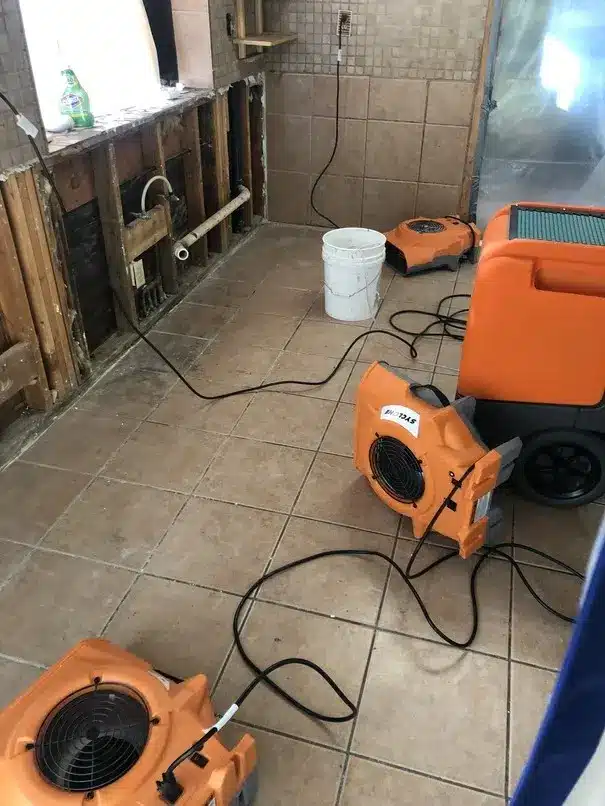
Fans and a household dehumidifier help with small amounts of water, but they can’t dry the inside of walls, subfloors or a crawl space. Professional restoration uses water extraction equipment, commercial dehumidifiers and air movers, and checks the moisture daily with meters until the structure is actually dry.
If the water is in your crawl space
Crawl spaces are where hidden damage starts in many Seattle homes. Standing water under the house soaks insulation and the vapor barrier, raises humidity in the whole home, and can lead to mold on the floor joists and subfloor. Signs to look for after a storm:
- A musty smell inside the house
- Floors that feel damp, cold or soft
- Insulation hanging down or lying in water
- Water you can see through the crawl space access hatch
A flooded crawl space needs pumping out, removal of wet insulation and debris, drying, and usually a new vapor barrier. See our crawl space cleaning service.
Will insurance cover it?
It depends on your policy and where the water came from. As a general rule:
- Sudden internal water, such as a burst pipe, is often covered by a standard homeowners policy.
- Flooding from outside, meaning surface or rising water, usually needs separate flood insurance.
- Sewer or drain backup often requires an add-on (endorsement) to your homeowners policy.
Call your insurer or agent to confirm. Either way, photos, moisture readings and a professional report make the claim easier. We provide that documentation and work with most major insurance companies.
How to prepare before the next storm
- Clean gutters and downspouts in the fall, and again after big windstorms.
- Extend downspouts so water lands a few feet from the foundation, and check that the soil slopes away from the house.
- Test your sump pump, and consider a battery backup.
- Ask a plumber about a backwater valve if your basement has floor drains.
- Check the crawl space vapor barrier and the foundation vents.
- In Seattle, free sandbags are available for flood-prone areas; check Seattle Public Utilities for locations. For non-emergency flooding in Seattle, call SPU at (206) 386-1800.
- Save our number: (206) 203-6155.
When to call a professional
Call a restoration company when:
- Water is more than an inch or two deep, or covers more than one room
- The water came from a sewer backup or from outside
- Water got into walls, under flooring or into the crawl space
- You can’t get everything dry within 24–48 hours
- You smell mold or see it starting
911 Restoration Seattle responds 24/7 across Seattle, Federal Way, Kent, Tacoma and nearby cities, with an average response time of 45 minutes. See our water damage restoration and sewage backup cleanup services, or call (206) 203-6155.
FAQs
How long does it take to dry a flooded basement?
With professional equipment, drying usually takes several days, depending on how much water there was and the materials involved. Moisture readings, not the look of the surface, tell you when it’s dry.
Can I just use fans?
Fans help with a small, clean spill caught early. For anything more, fans alone usually leave moisture inside walls and subfloors, where mold can grow.
Is floodwater in my basement dangerous?
It can be. Water from outside or from a sewer backup can carry bacteria and chemicals. Avoid contact, wear gloves and boots, and keep children and pets away.
Does homeowners insurance cover basement flooding?
Sudden internal leaks are often covered. Flooding from outside usually needs flood insurance, and sewer backup often needs an add-on. Check your policy.
Sources: NOAA, “What is an atmospheric river?”; National Environmental Health Association, Responding to Indoor Mold Concerns; KING 5, Seattle Public Utilities prepares for urban flooding.