

Why insulation fails in Seattle crawl spaces
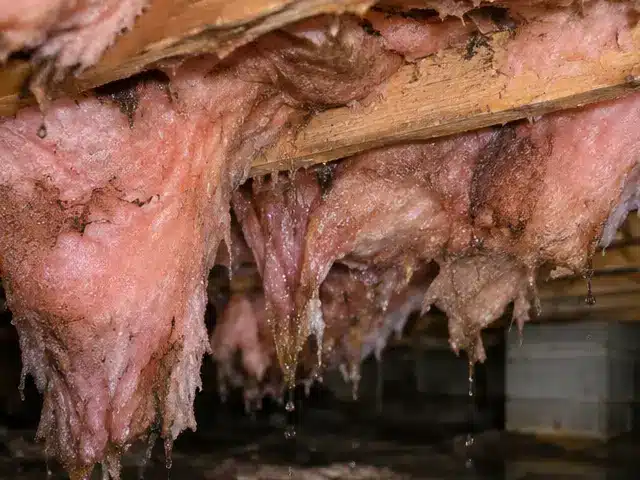
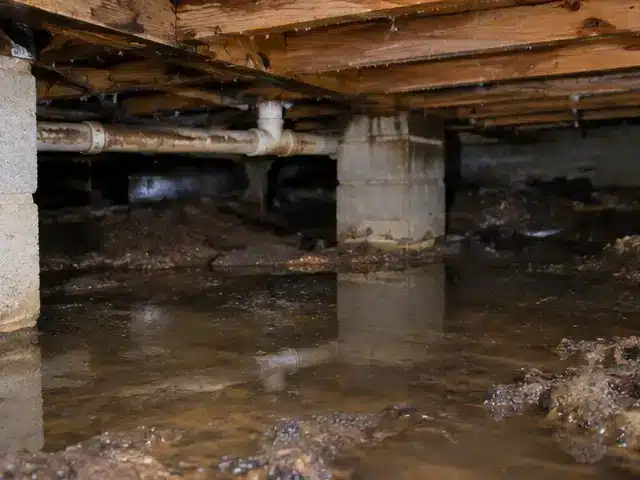
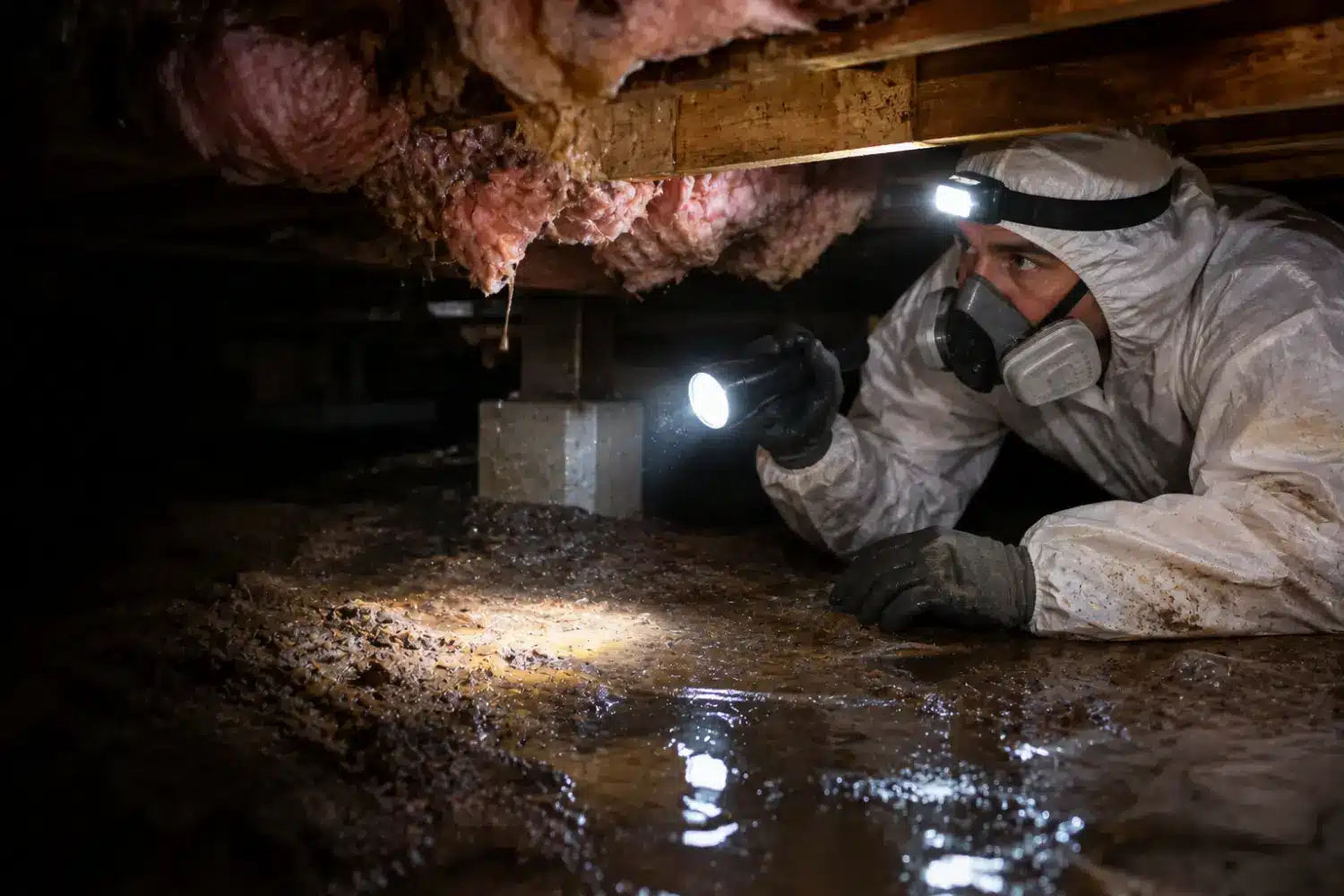
Many Seattle-area homes have insulation stapled or wedged between the floor joists over a dirt crawl space. During the long wet season, groundwater, poor drainage and condensation keep that space damp. Insulation absorbs the moisture, gets heavy and falls down. Flooding makes it worse: if your crawl space has standing water, start with crawl space water removal, then deal with the insulation.
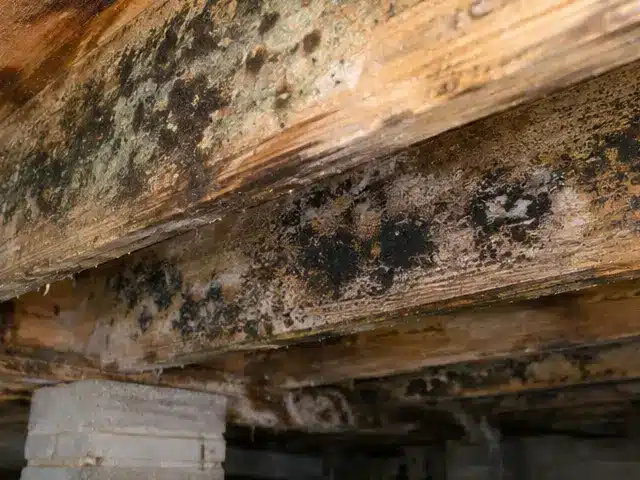
Insulation that stays damp holds moisture against the wood above it, which can lead to mold on the joists and subfloor. Pests can also nest in it, leaving droppings and debris. Removing that contamination is part of our crawl space cleaning work.
Signs your insulation needs to come out
- Insulation sagging, falling down or lying on the ground
- Wet, stained or matted insulation after rain or a plumbing leak
- Visible mold on the insulation or the joists around it
- Signs of rodents or other pests, such as nesting or droppings
- Exposure to sewage from a broken sewer line under the house
- Floors that feel colder than they used to, or a musty smell indoors
What our insulation removal and replacement includes
- Inspection of the insulation, moisture levels, mold and pest contamination, and the cause of the damage.
- Removal and disposal of wet, moldy or contaminated insulation, old vapor barrier and debris.
- Cleaning of the crawl space, with HEPA vacuuming to capture dust and spores. If mold is on the framing, see crawl space mold removal.
- Drying of the soil, framing and subfloor if moisture is present.
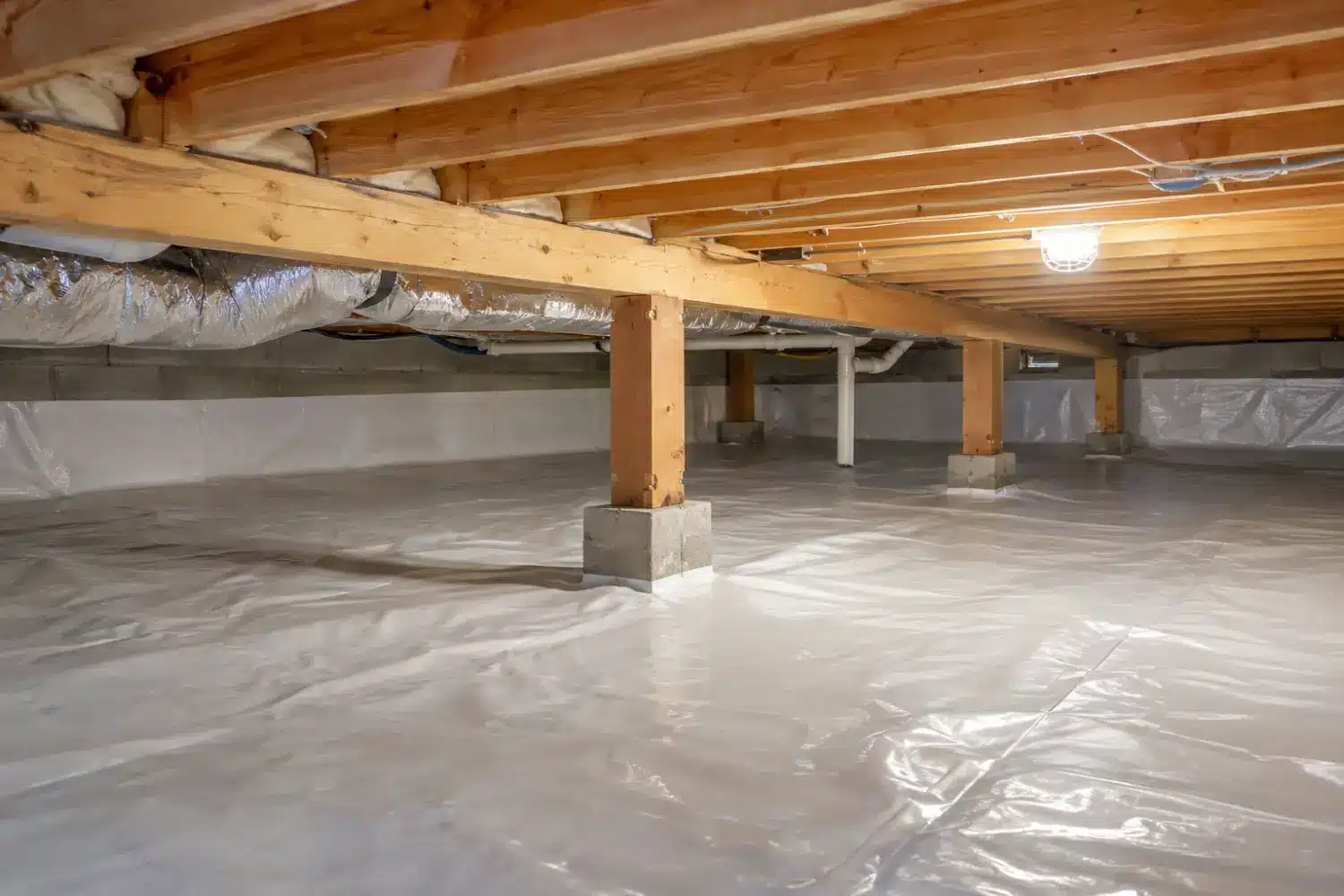
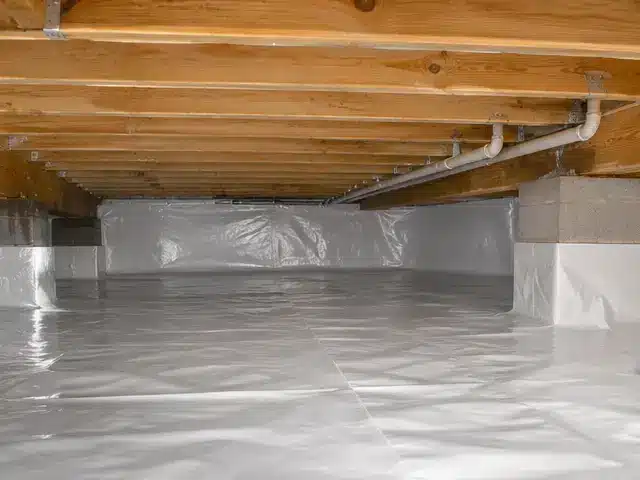
- Replacement of insulation where needed, plus a new crawl space vapor barrier to help keep ground moisture away from it.
Why the cause comes first
New insulation in a crawl space that still floods or stays humid will fail the same way. Before we replace anything, we find out why the old insulation got wet or dirty: groundwater after heavy rain, a plumbing leak, a missing vapor barrier, or pests. We fix what is in our scope, such as drying and a new barrier, and tell you about drainage or ventilation problems that need other trades. That way the new insulation has a dry space to work in.
What to do now
If the insulation is wet from sewage or floodwater, stay out of the crawl space and keep children and pets away. Do not try to dry soaked insulation with fans; it usually has to come out. The EPA notes that porous materials may have to be thrown away if they become moldy. If you are dealing with sewage, see our sewage backup cleanup service.
We remove and replace crawl space insulation in Seattle, Tacoma, Auburn and nearby communities.
Call (206) 203-6155 any time, day or night, for a free estimate.