

Why crawl space mold is common around Seattle
Western Washington’s long wet season keeps the soil under many homes damp for months. Older houses often sit over a vented crawl space with a dirt floor, where groundwater, poor drainage and condensation keep the air humid. Moisture rises into the floor framing and insulation, and mold grows on the wood. The Department of Energy’s Building America Solution Center notes that moisture can lead to mold and rot along floor joists and rim joists.
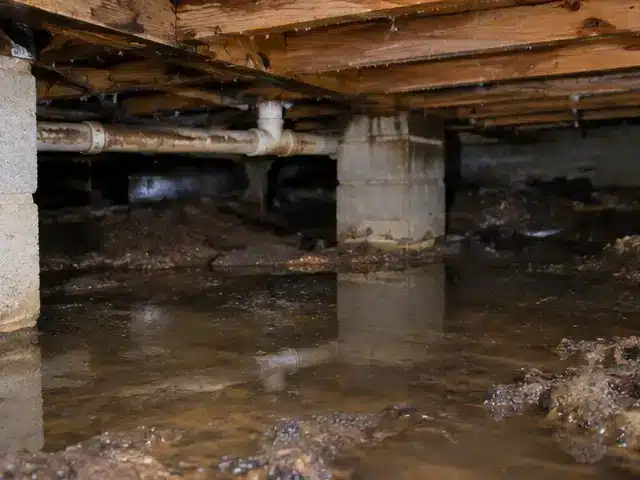
Mold often follows a water event that was not fully dried. If your crawl space flooded and still has standing water, start with crawl space water removal.
Signs of mold under the house
- A musty or earthy smell in the house, strongest near floor vents
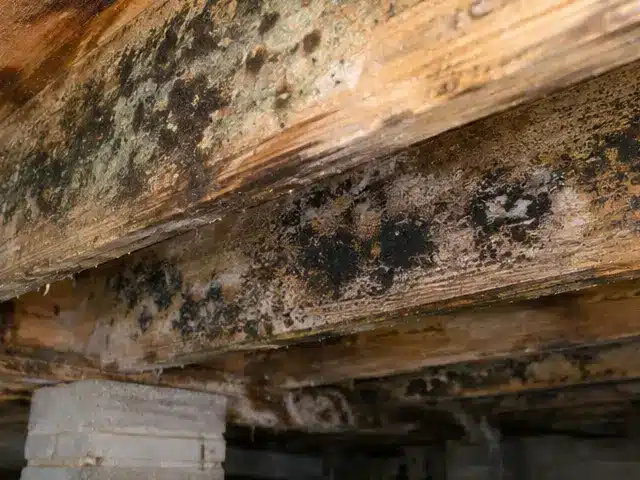
- White, green or black growth on joists, beams or the underside of the subfloor
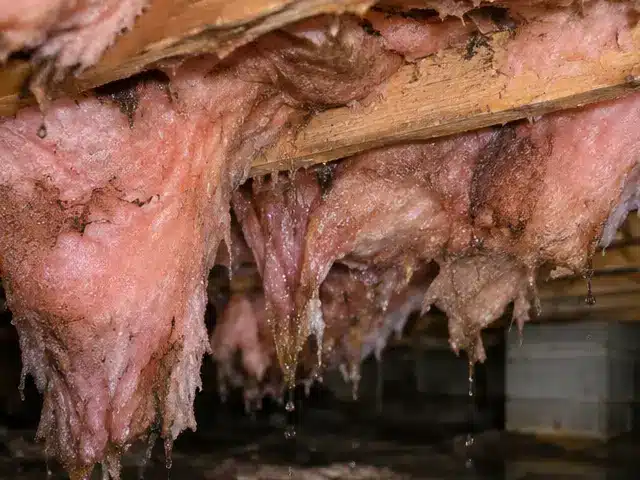
- Insulation that is stained, wet or falling down between the joists
- A torn or missing vapor barrier with damp soil underneath
- Floors above that feel soft, cold or uneven
What our crawl space mold removal includes
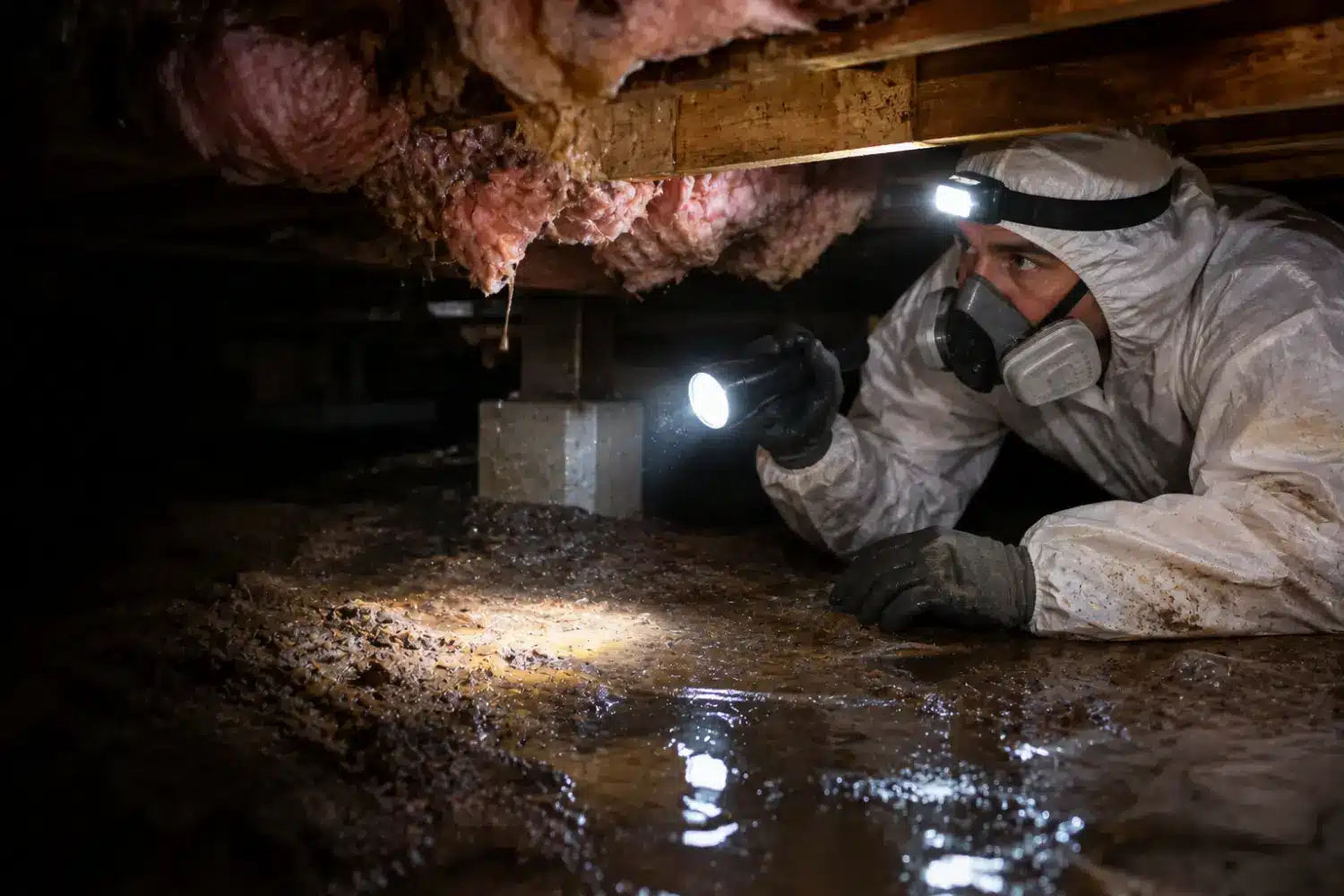
- Inspection. We check how far the growth extends, take moisture readings and look for the water source.
- Removal of moldy materials. Insulation, old vapor barrier and debris that hold mold are removed and disposed of. See crawl space insulation removal.
- Cleaning and treatment. Affected joists, beams and subfloor are cleaned and treated, with HEPA vacuuming to capture spores and dust.
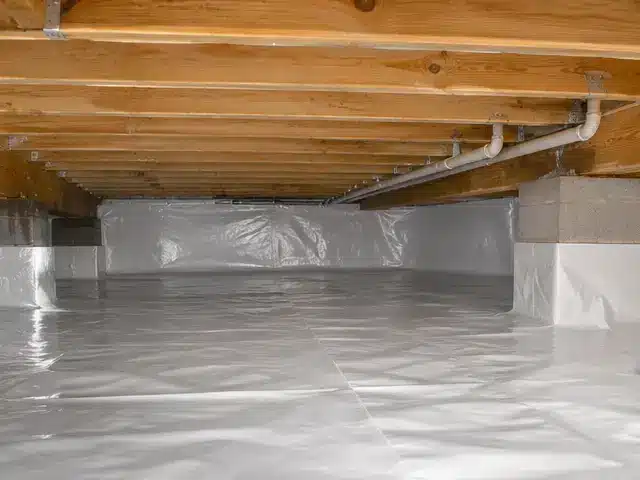
- Moisture control. We dry the space, install a new crawl space vapor barrier where needed, and point out drainage or ventilation problems.
If mold has spread beyond the crawl space into walls, the attic or living areas, our mold remediation service covers containment and removal throughout the house. For everything under the house, see crawl space cleaning.
Crawl space mold vs. whole-house mold
This page is about growth under the floor: on joists, beams, rim joists and the underside of the subfloor. The work happens in a tight space with dirt, insulation and plumbing in the way, and success depends on drying the space and controlling ground moisture. When mold also shows up in walls, ceilings or the attic, the job becomes a whole-house remediation with containment in the living space.
What to do now
Avoid crawling through moldy areas or pulling down moldy insulation yourself, since that can spread spores into the house. Keep the access hatch closed. The EPA notes that porous materials may have to be thrown away if they become moldy, and recommends professional help for areas larger than about 10 square feet. If you are buying or selling a home and an inspection found crawl space mold, call early so the work fits your closing timeline.
We remove crawl space mold in Seattle, Renton, Burien and nearby King and Pierce County communities.
Call (206) 203-6155 any time, day or night, for a free estimate.