

What causes attic mold in Seattle
Seattle-area attics stay cold and damp for months, and most attic mold traces back to one of four causes:
- Roof leaks: a failed flashing, a damaged shingle or a clogged gutter backing water under the roof.
- Bath and kitchen fans: ducts that end in the attic, or that came loose, blow humid air straight onto the sheathing. The EPA recommends venting moisture-producing appliances to the outside.
- Poor ventilation: blocked soffit vents or insulation pushed against the roof deck.
- Winter condensation: warm, moist air leaking up from the house through light fixtures, attic hatches and plumbing gaps.
There is also a cause that surprises many homeowners. A study by RDH Building Science on test roofs in the Pacific Northwest found that on clear winter nights the roof sheathing cools below the dew point and collects condensation, even with no moisture coming from the house. Sheathing moisture stayed above 20 percent, a level of concern for fungal growth, for the whole winter, and the authors found ventilation alone could not prevent it. Green Building Advisor has also covered mold on roof sheathing in newer, code-built Pacific Northwest homes. This is why a proper fix looks at air sealing and fan ducts, not only vents.
What attic mold removal includes
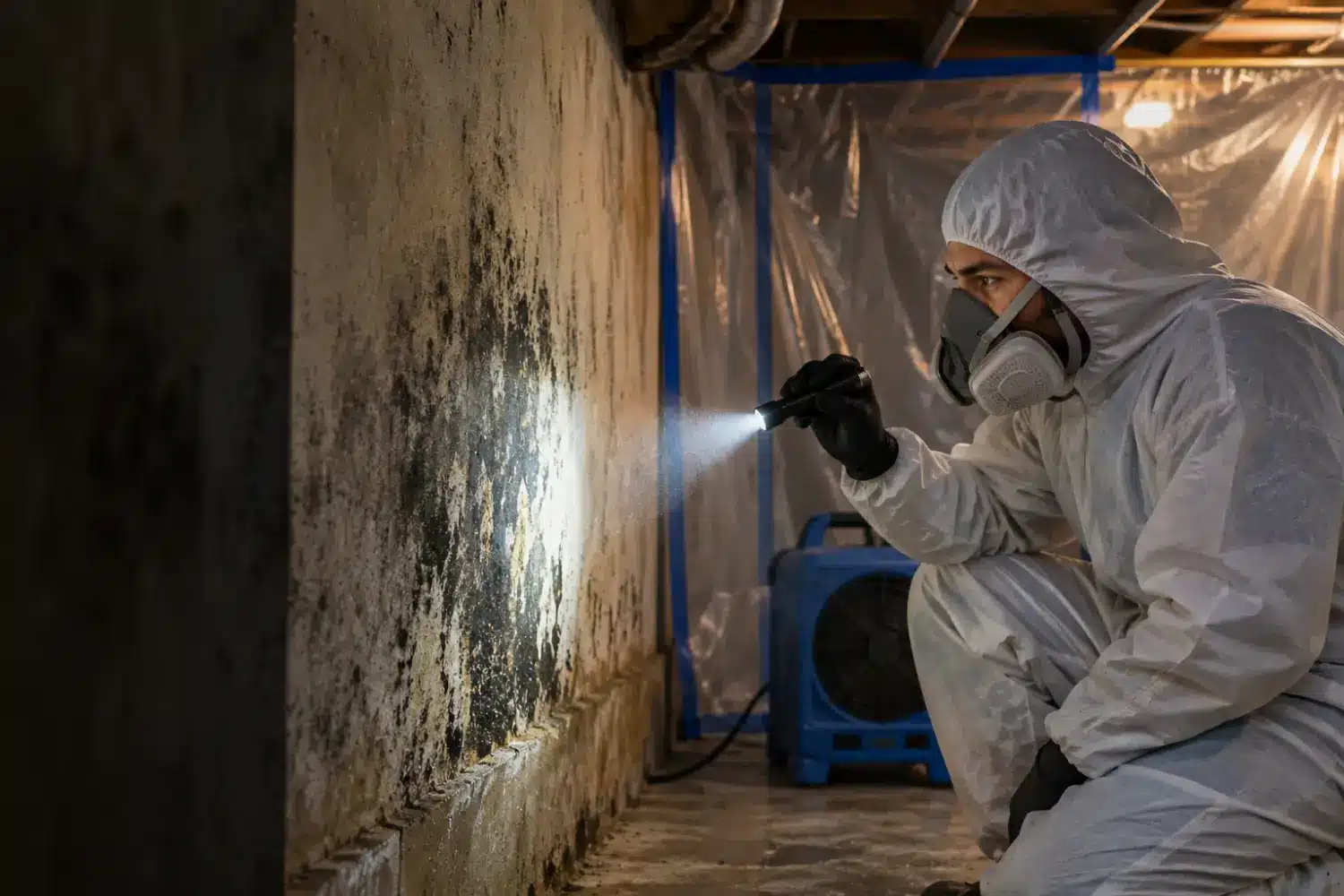
Attic work follows the same steps as our full mold remediation service, adapted to tight, hard-to-reach space:
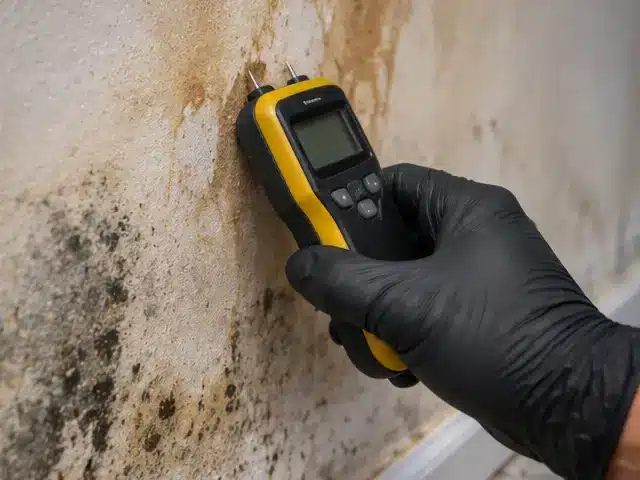
- Inspection and moisture readings to map the growth and confirm the cause.
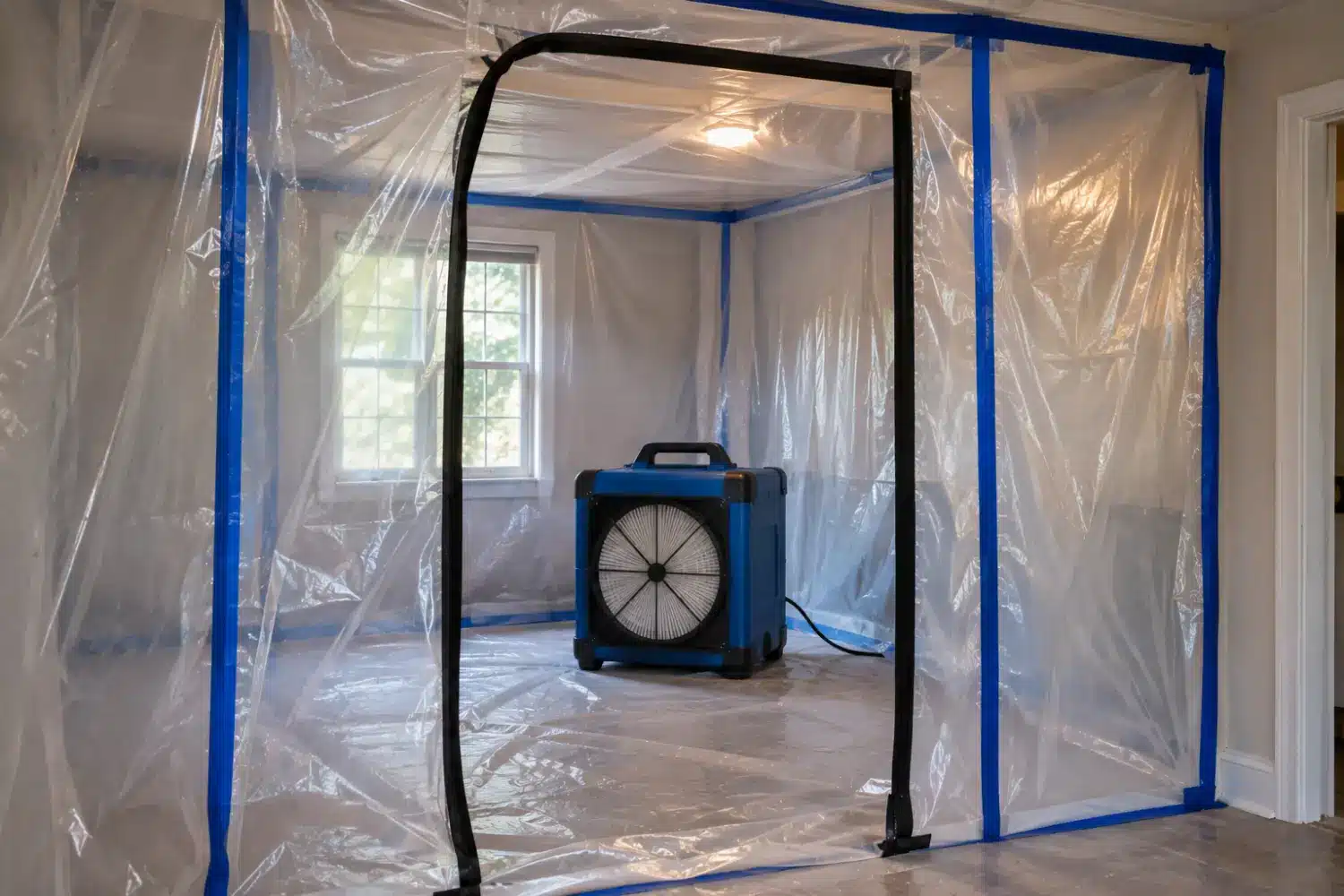
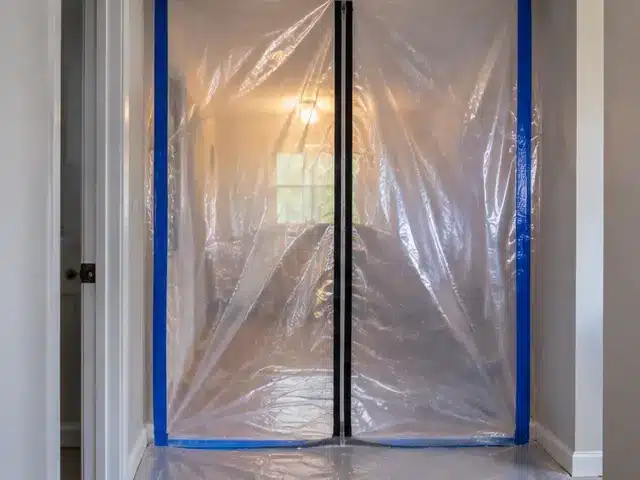
- Containment at the attic access, with HEPA air scrubbers, so spores don’t drift into bedrooms below.
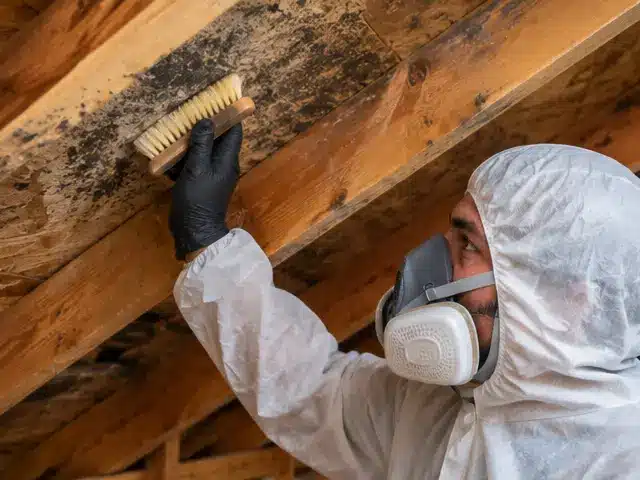
- Removal and cleaning: we clean affected sheathing and framing and remove materials that can’t be cleaned. The EPA notes porous materials such as insulation may have to be thrown away once moldy.
- Moisture control: we fix the ventilation or fan problem. A roof leak has to be repaired before the attic will stay dry.
What to do now
- If you go into the attic, step only on the joists; the ceiling below won’t hold your weight.
- Don’t pull insulation or scrape the sheathing. That spreads spores into the house.
- If water is dripping, put a container under it and move belongings away from the ceiling below.
- Check whether your bath fan blows outside. Hold tissue near the exterior vent while it runs.
- Note ceiling stains, a musty smell upstairs, or frost on the sheathing on cold mornings.
When to call
Call when the staining covers more than about 10 square feet, when insulation is wet, when a roof leak is active, or when a home inspection flagged the attic before a sale. If the moisture is spreading to walls or ceilings, see mold inspection; damp problems lower in the house are covered by basement mold removal and crawl space cleaning. If the stains look black, black mold removal explains why color doesn’t change the process.
We remove attic mold in Seattle, Tacoma, Puyallup and across King and Pierce County.
Call (206) 203-6155 for attic mold removal and a free estimate, 24/7.