

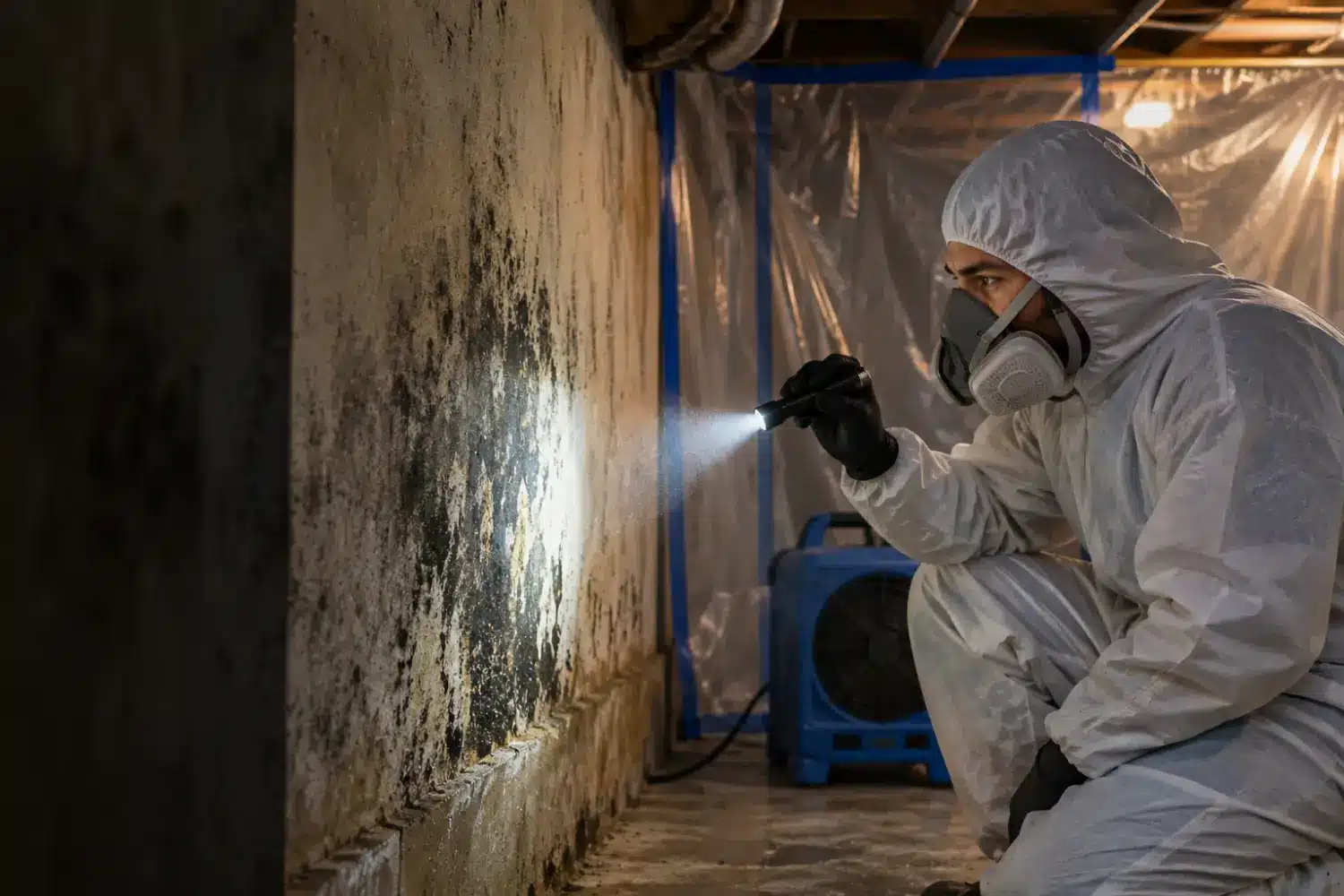
Why Seattle basements grow mold
Western Washington’s long wet season keeps the soil around foundations saturated for months. Strong winter storms, including the atmospheric rivers that hit the region, can push water through foundation cracks and floor drains faster than gutters and drains can carry it away. The most common sources we find:
- Seepage through walls and slabs after heavy rain.
- Leftover moisture from a past leak or flood that was never fully dried.
- Condensation on cool concrete walls and cold water pipes in summer.
- High humidity from laundry, a vented dryer that leaks, or no air movement.
- Stored items such as cardboard boxes, carpet and furniture against exterior walls.
The EPA recommends drying water-damaged areas within 24 to 48 hours and keeping indoor humidity below 60 percent, ideally 30 to 50 percent. Many basements miss both.
After a flood: water first, then mold
If your basement has standing water or wet carpet right now, start with flooded basement cleanup. Extracting the water and drying the structure quickly is what keeps a water job from becoming a mold job. If the water came from a sewer backup or from outside, it may carry bacteria; keep children and pets away and see sewage backup cleanup.
What basement mold removal includes
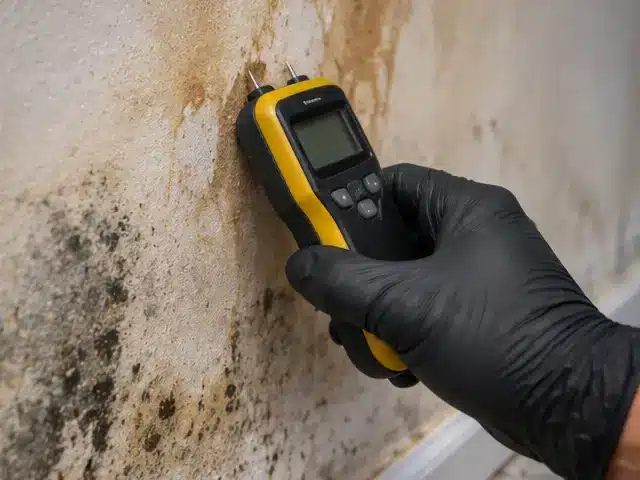
- Moisture mapping: moisture readings in walls, floors and framing to find every wet area.
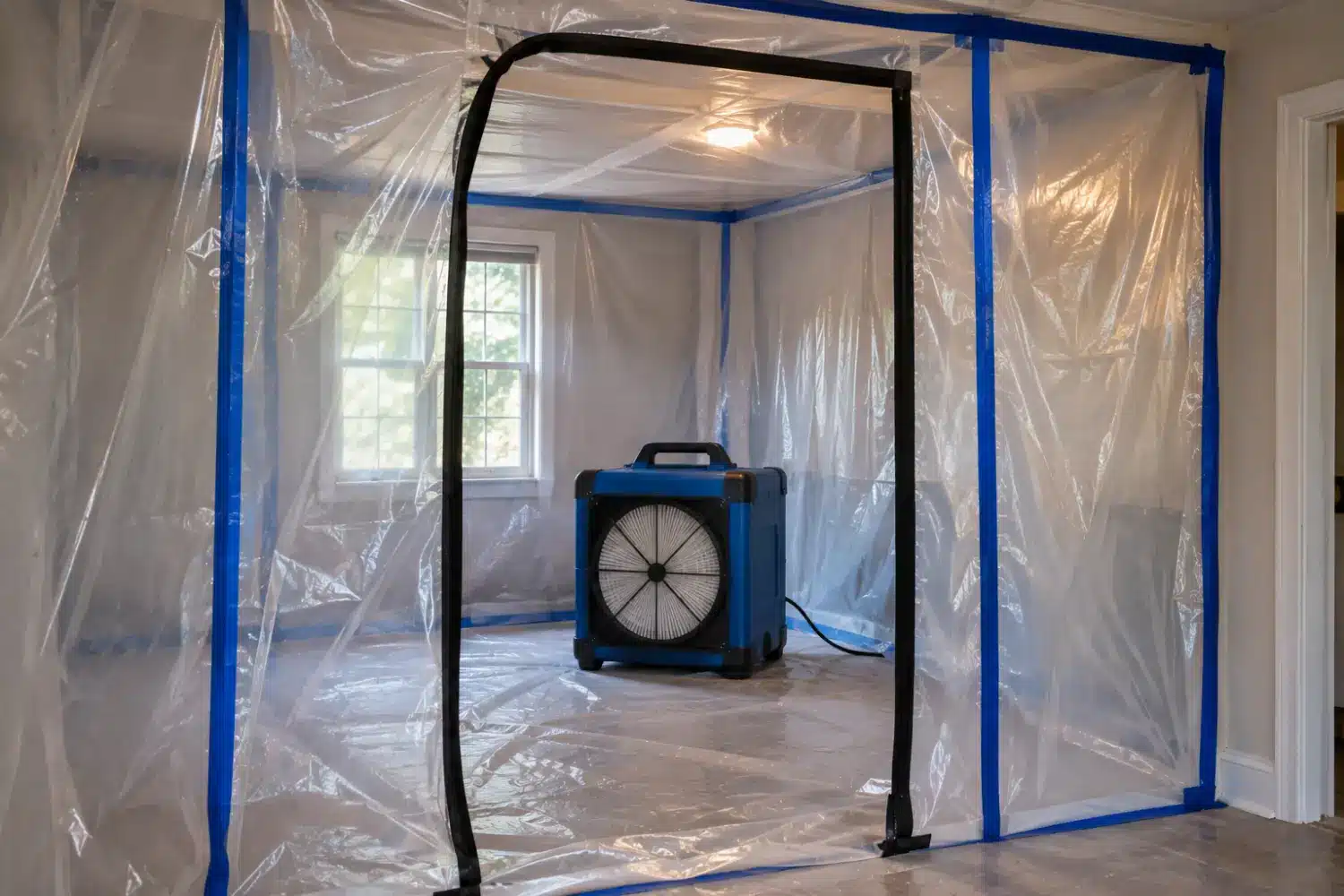
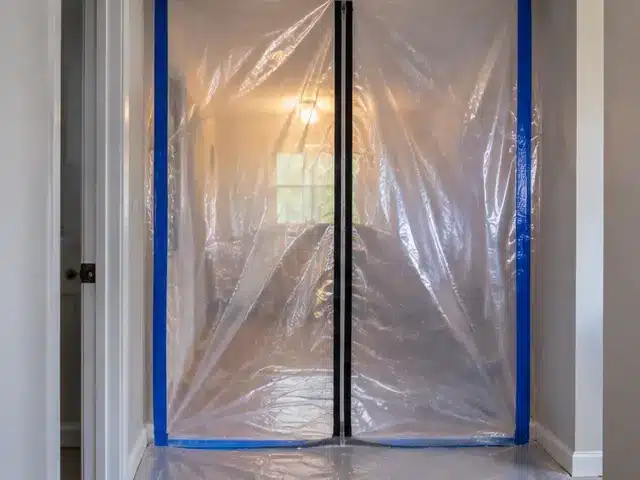
- Containment and HEPA air filtration so spores don’t move up the stairs or through the HVAC system.
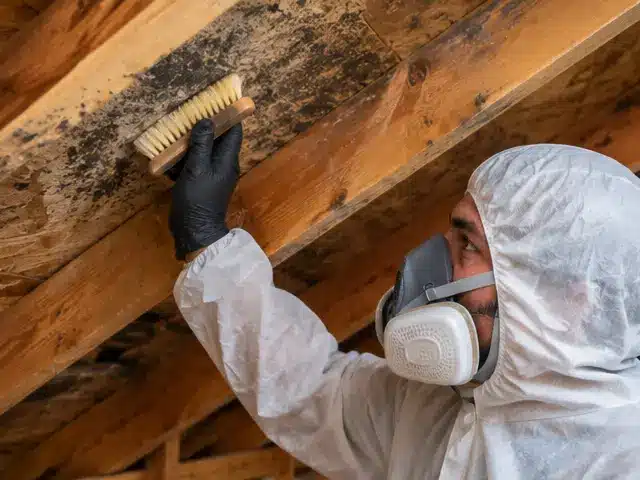
- Removal: moldy drywall, carpet, pad and insulation that can’t be cleaned. In a finished basement this is often the lower section of the walls.
- Cleaning of concrete, studs and other materials that can be saved.
- Drying and moisture control: we dry the structure and confirm it with readings before any rebuild.
This is the basement version of our full mold remediation service.
What to do now
- Don’t walk into standing water if outlets, cords, a furnace or water heater could be wet. Switch off the power only if you can reach the panel without touching water.
- Stop the water if you can: shut off the main valve for a pipe leak, clear gutters and redirect downspouts for rain.
- Photograph the damage before moving anything.
- Move dry belongings upstairs and leave moldy items in place until they can be bagged.
When to call
Call when mold covers more than about 10 square feet, when it’s on drywall or carpet, when the water came from a flood or sewer, or when the smell keeps returning. If you aren’t sure where it’s coming from, start with a mold inspection. Mold under the house is handled by crawl space cleaning, attic growth by attic mold removal.
We remove basement mold in Seattle, Kent, Auburn and across King and Pierce County.
Call (206) 203-6155 for basement mold removal and a free estimate, 24/7.