

Black mold: what the color does and doesn’t tell you
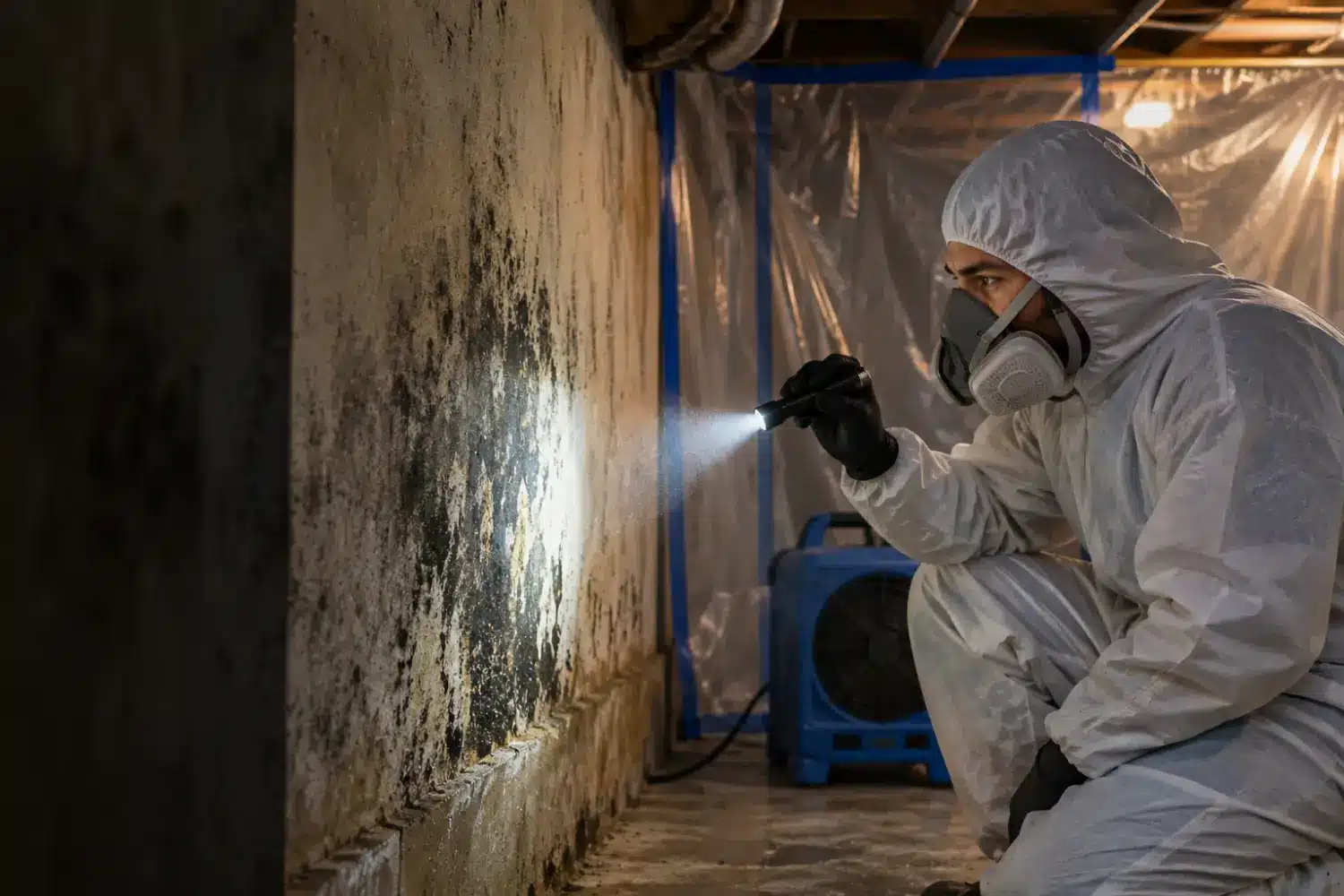
The mold most people mean by “black mold” is Stachybotrys chartarum. The CDC describes it as a greenish-black mold that grows on cellulose-rich materials such as gypsum board, fiberboard and paper, and that needs constant moisture from water damage, leaks, condensation or flooding. Plenty of other molds also look black or dark green, so you can’t identify it by sight.
The good news is that you don’t need to. The CDC says it is not necessary to determine what type of mold is growing, and that all molds should be treated the same with respect to potential health risks and removal. The EPA adds that if mold is visible, sampling is usually unnecessary.
What the color does tell you: something has been wet for a while. Dark growth on drywall usually means a slow leak, condensation or water damage that wasn’t dried in time.
Where we find black mold in Seattle homes
- Behind and under sinks, toilets and washers, where slow plumbing leaks soak drywall.
- Window sills and frames soaked by winter condensation. See our guide to water damage around windows.
- Bathroom ceilings and walls with weak exhaust.
- Lower walls in basements after seepage or a flood (see basement mold removal).
- Attic sheathing darkened by leaks or condensation (see attic mold removal).
How we remove it
Black mold gets the same complete process as any mold remediation job:
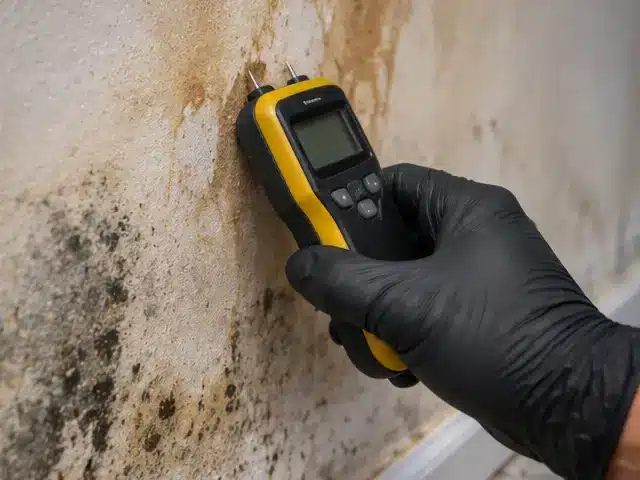
- Inspection with moisture readings to find how far the growth and the wet material reach.
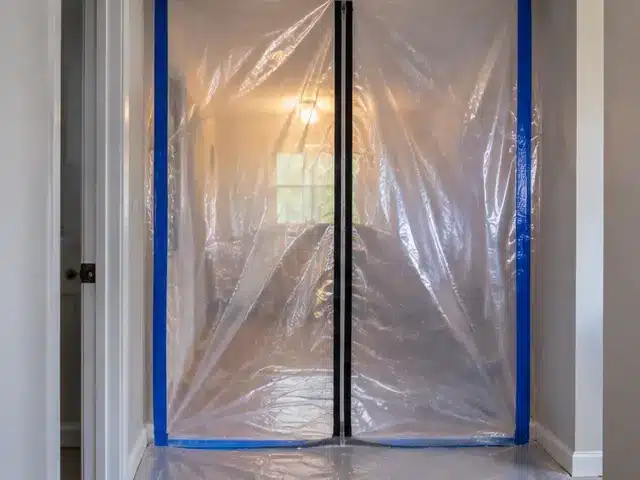
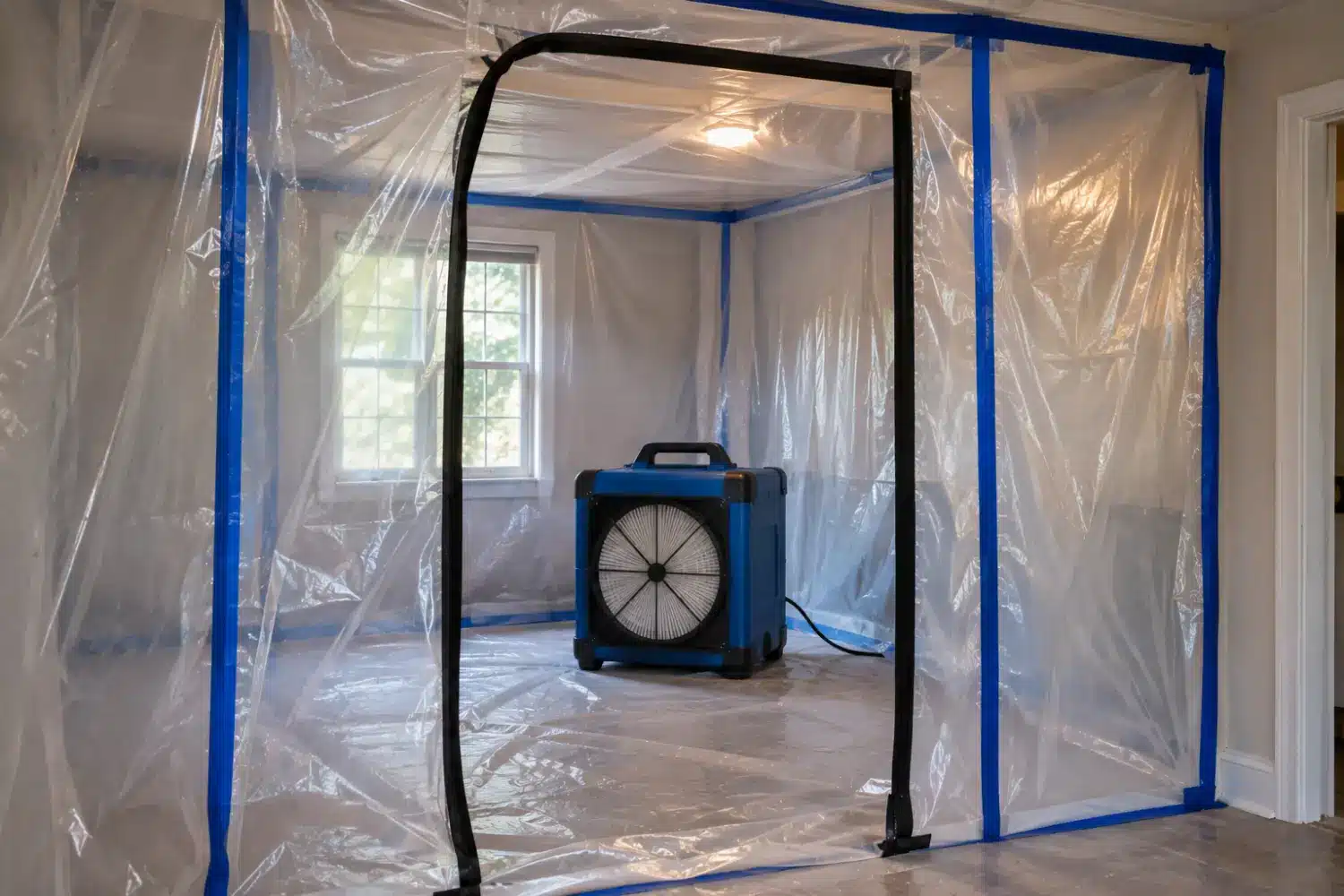
- Containment with plastic barriers and HEPA air scrubbers.
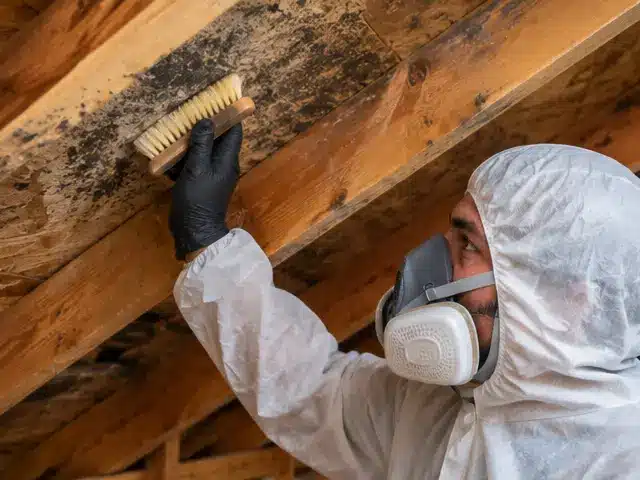
- Removal of moldy drywall and other porous materials that can’t be cleaned, and cleaning of hard surfaces and framing.
- Moisture control: we correct the leak, humidity or ventilation problem.
- Post-remediation testing when needed, to confirm the area is clean.
What to do now
- Don’t scrape, sand or dry-brush the mold. That puts spores in the air.
- Stop the water if there is an active leak.
- Small spots on hard surfaces can be cleaned. The CDC suggests soap and water or a bleach solution of no more than 1 cup per gallon, with gloves, goggles and ventilation, and never mixed with ammonia.
- The CDC notes that people with asthma, mold allergies, weakened immune systems or chronic lung disease can react more strongly. If that’s someone in your home, talk to a doctor.
When to call
Call when the growth covers more than about 10 square feet, is on drywall or inside walls, came back after cleaning, or followed a flood or sewage backup. If you smell mold but can’t find it, start with a mold inspection. We work in Seattle, Burien, Kent and across King and Pierce County.
Call (206) 203-6155 for black mold removal and a free estimate, 24/7.