

What counts as black water
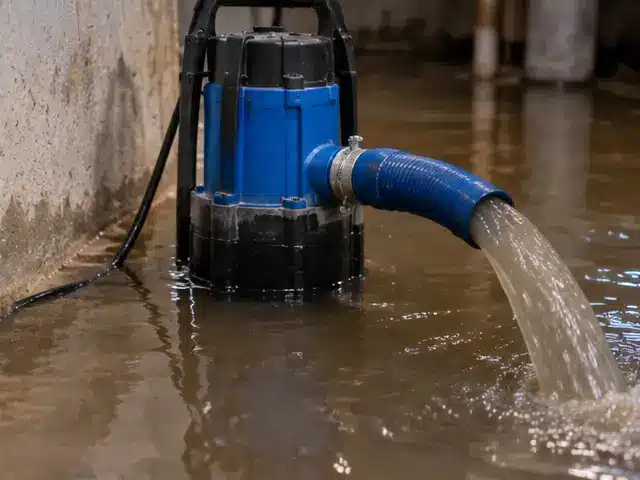
The ANSI/IICRC S500 consensus body describes Category 3 water as grossly contaminated water that can contain pathogenic, toxigenic or other harmful agents. Its examples include sewage, wastewater that backs up from beyond a trap and rising water from rivers or streams. In Seattle-area buildings, that usually means one of three things:
- Sewer backups through a basement floor drain, shower or toilet, often from a blocked side sewer. See sewage backup cleanup.
- Floodwater from outside during an atmospheric river, when creeks, rivers or overloaded drainage push water into basements and ground floors.
- Clean or gray water that sat too long. The IICRC notes that time and temperature can change a water’s category.
The region saw this in December 2025, when the Green River levee breach in Tukwila led to an evacuation order for part of north Kent and south Tukwila, as noted on our commercial water damage page. Our atmospheric river flooding guide covers what homeowners should do when a storm floods a basement or crawl space.
What must be removed and what can be cleaned
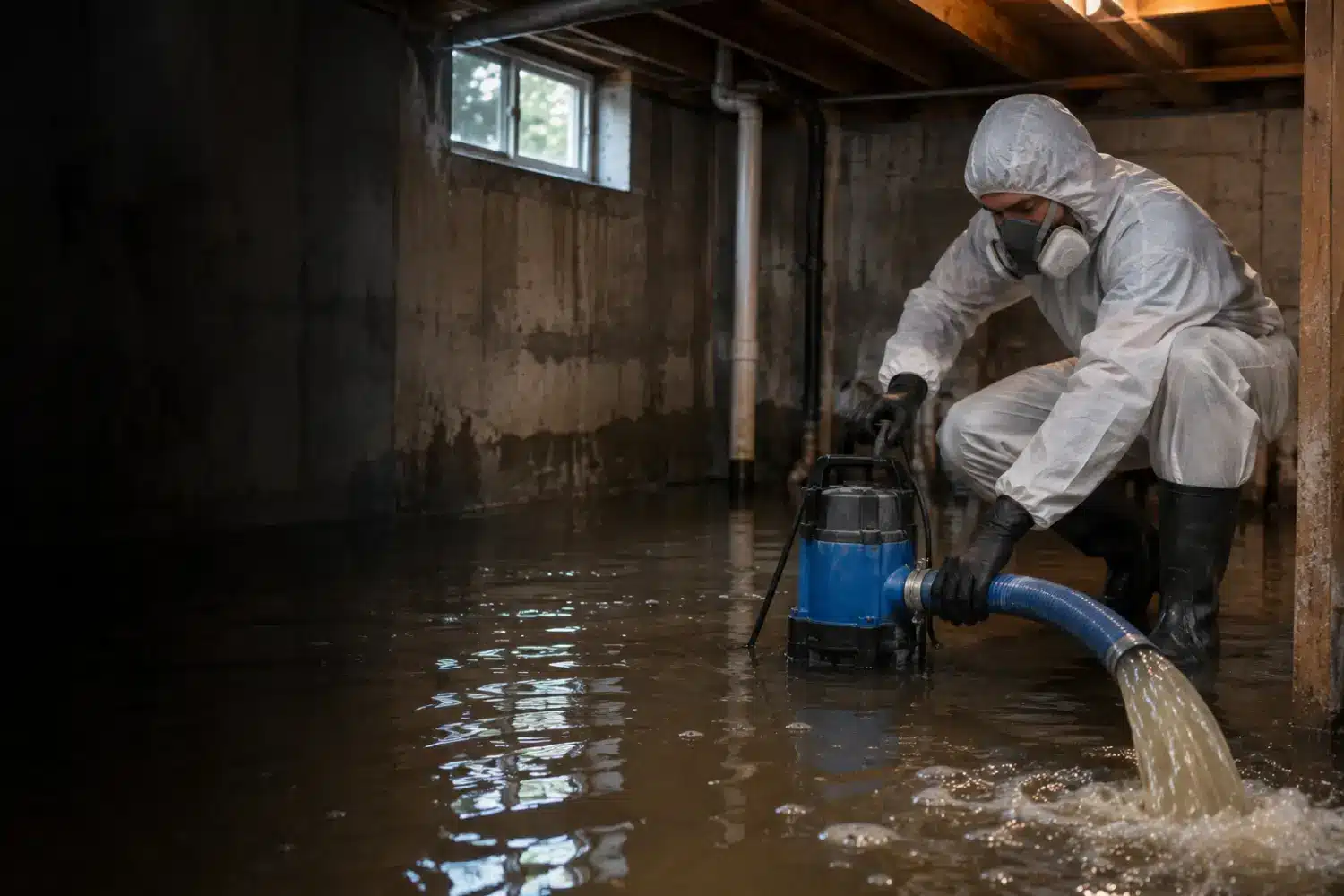
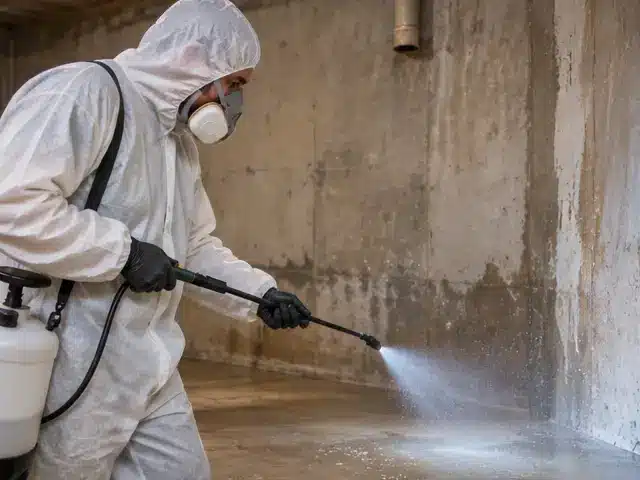
With black water, the cleanup order matters: remove, then clean and disinfect, then dry. Drying contaminated material in place leaves the contamination behind.
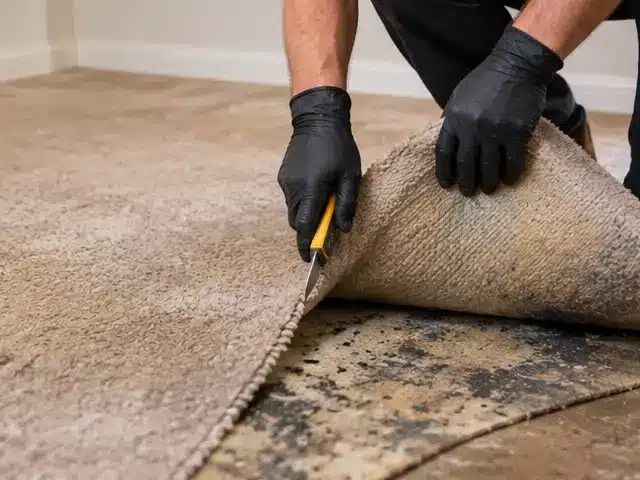
- Usually removed: carpet and pad, drywall and insulation that the water or wicking reached, particleboard cabinets, upholstered furniture, mattresses, cardboard and paper.
- Usually cleaned and disinfected: concrete, tile, framing lumber, metal, glass and sealed hard surfaces.
- Always discarded: food, medicine and cosmetics that touched the water.
The EPA recommends drying a flooded home and its contents within 24 to 48 hours if you can, and warns that failing to remove contaminated materials can create long-term health risks. That is why removal and disinfection happen first and fast.
What to do right now
- Stay out of black water if outlets, cords or appliances may be under water. Cut power at the breaker only if you can reach it without touching water.
- Stop using sinks, toilets and showers if the water came up from a drain.
- Keep children and pets away. If you must enter, the CDC advises rubber boots, goggles and gloves for sewage cleanup, and a waterproof bandage over any cuts.
- Don’t run household fans or HVAC in the area; they spread odor and contaminants.
- Photograph the water level and damaged items before anything is moved.
When to call a professional
Call us for any black water that soaked carpet, drywall or insulation, covers more than a small hard-floor area, or got under the house (see crawl space sewage cleanup). If the source was a toilet, start with our toilet overflow cleanup page. We clean up Category 3 water in Kent, Tukwila, Auburn, Seattle and across King and Pierce County.
Call (206) 203-6155 for black water cleanup, 24/7.