

Why sewage and floodwater need disinfection, not just drying
Sewage and outside floodwater are Category 3 water. They carry bacteria and other contaminants into everything they touch, including the parts of a building you can’t see: the bottom plates of walls, the subfloor, the concrete slab and the crawl space. Drying alone doesn’t make those surfaces safe. The CDC’s cleanup guidance says to throw out what can’t be cleaned or dried quickly, and to remove drywall and insulation that sewage or floodwater soaked.
In Seattle this usually happens two ways. A side sewer clogged by tree roots, common in the older clay and cast-iron lines in many neighborhoods, pushes sewage up through a basement floor drain or toilet. Or an atmospheric river overwhelms gutters, drains and sewers and sends water into the basement or crawl space.
What our sewage and flood disinfection includes
Disinfectant sprayed over dirt doesn’t work, so we follow a fixed order:
- Removal. Carpet, pad, insulation and drywall that the water soaked are cut out, bagged and documented with photos.
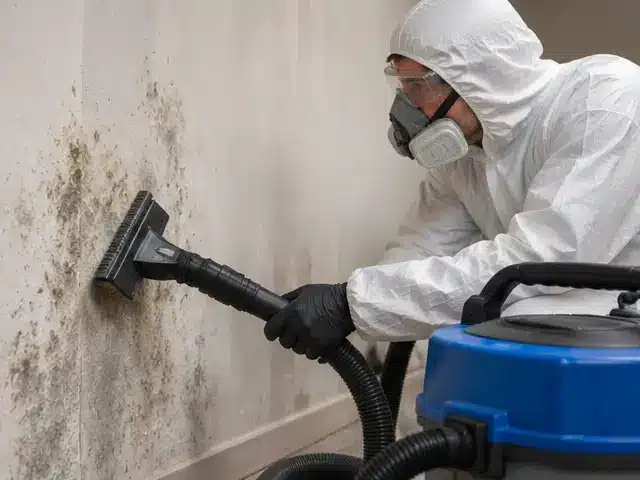
- Cleaning. Framing, studs, concrete and subfloors are scrubbed to remove soil, silt and residue.
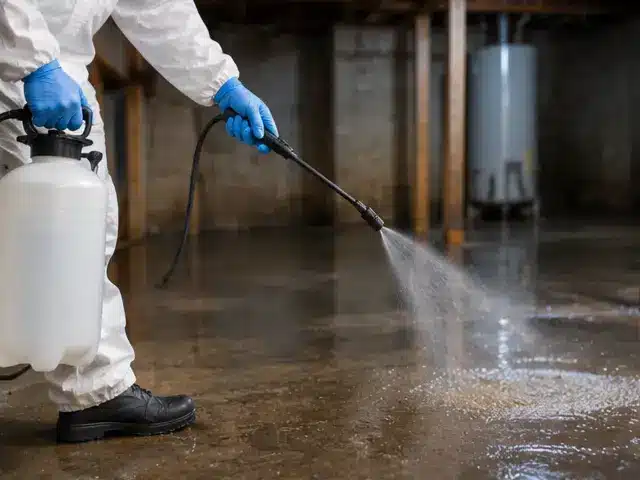
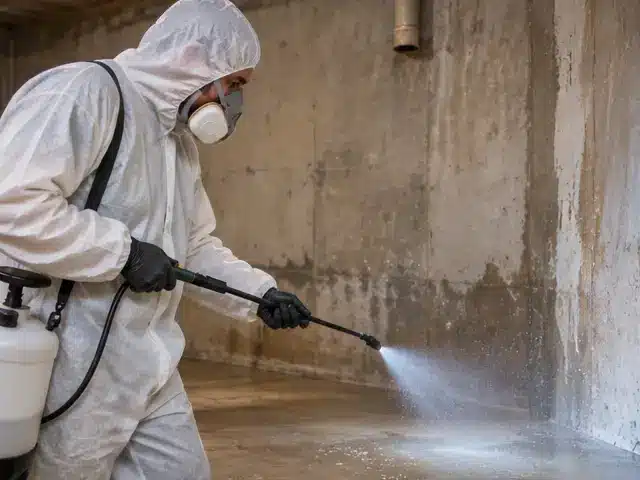
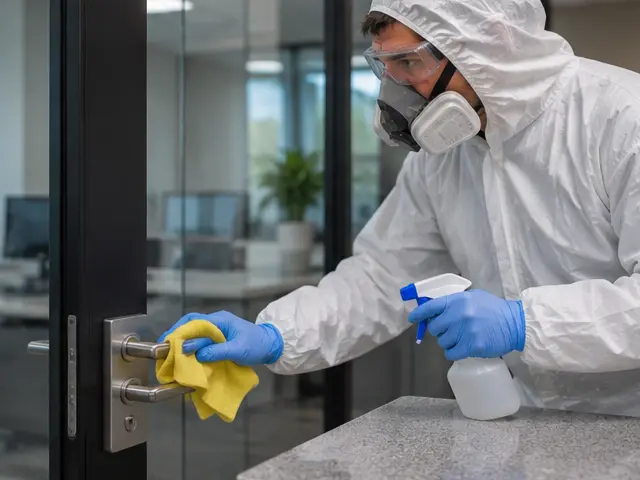
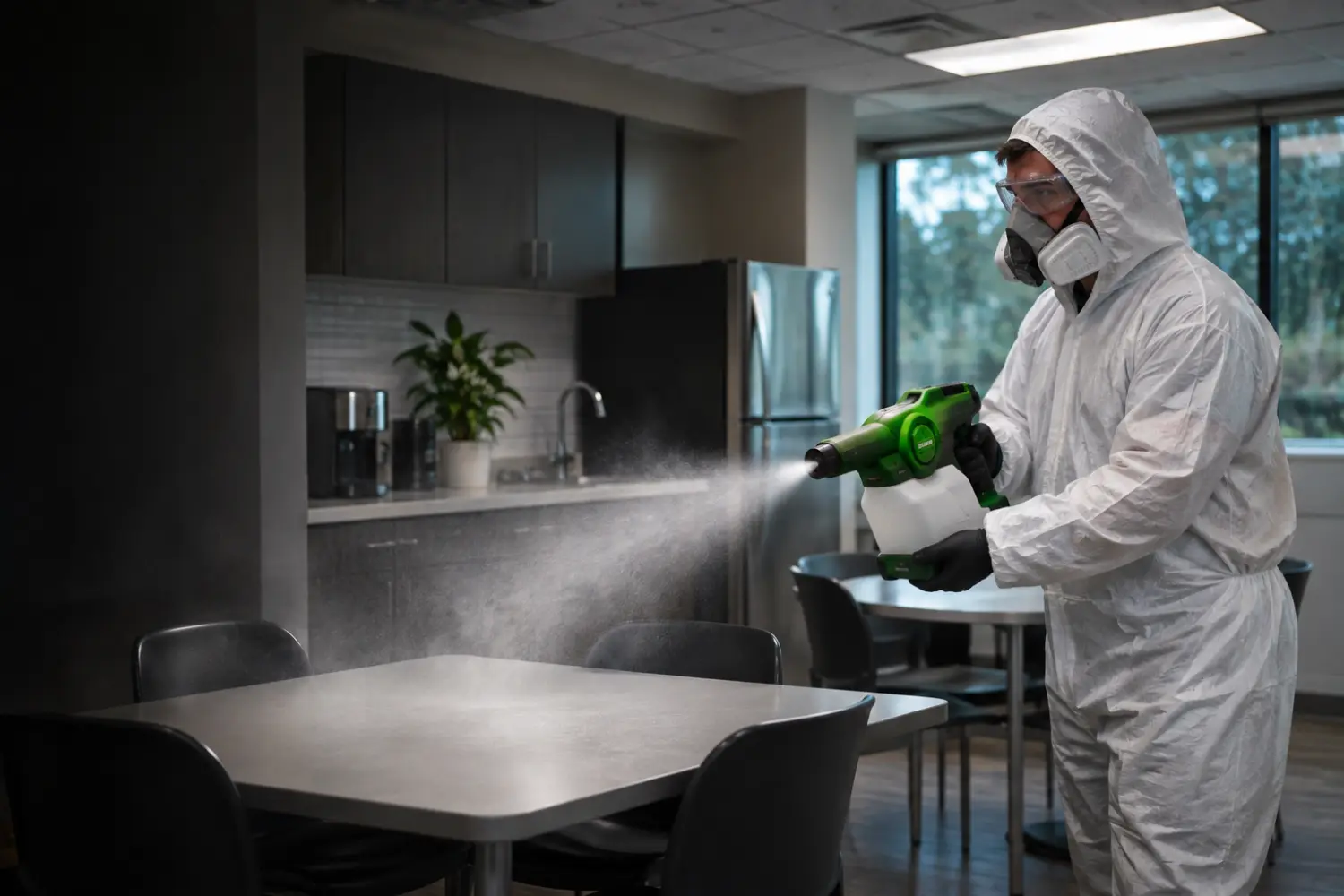
- Disinfection. We apply EPA-registered disinfectants to every affected surface, following the label directions. EPA registers disinfectants as antimicrobial pesticides, products made to destroy or inactivate bacteria and fungi on nonliving surfaces.
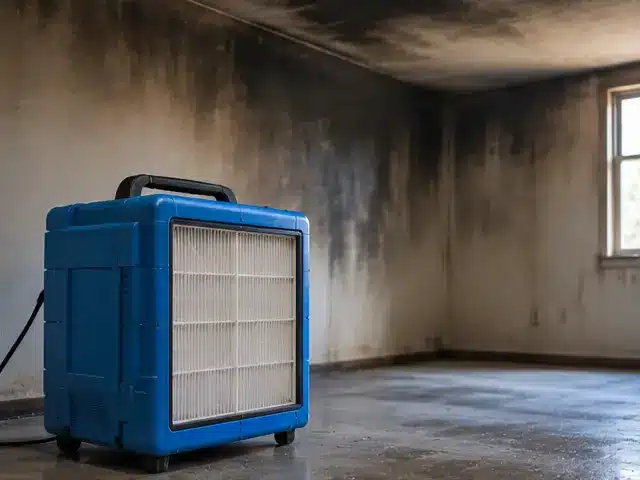
- Drying. Only then do we dry the structure, with moisture readings, through our water damage restoration process.
- Deodorizing. Lingering odor is treated as part of the job. See odor removal and deodorization.
If the sewage is still in the building, extraction comes first. That part is covered on our sewage backup cleanup page. Water under the house is handled by our crawl space cleaning team.
What to do before we arrive
- Stop using water in the building if the backup came from a drain. Every flush can come back up.
- Keep children, pets and anyone with a weak immune system away from the area.
- Don’t touch the water without rubber boots, rubber gloves and goggles, as the CDC recommends for sewage.
- Don’t run household fans or the HVAC in the affected area. They spread contaminants and odor.
- Take photos of the water line and damaged items before anything is moved. This helps with an insurance claim.
- For non-emergency street or drainage flooding in Seattle, call Seattle Public Utilities at (206) 386-1800.
When to call a professional
Call us if sewage or outside water touched drywall, carpet, insulation or wood framing, if the water reached more than one room, or if it got into a crawl space where you can’t see the extent. Household bleach and a shop vac can handle a small spill on tile. They can’t reach the inside of walls or the underside of a subfloor. This page covers disinfection after the water. For the full range of services, see sanitization and disinfection services. If the water also caused mold, see cleaning after mold removal.
We serve homes and businesses in Seattle, Renton, Kent and the rest of King and Pierce County.
Call (206) 203-6155 for sewage or flood disinfection, 24/7.