

Leaks we clean up
- Burst and frozen pipes in crawl spaces, garages, attics and exterior walls.
- Supply line failures at toilets, sinks, refrigerators and ice makers.
- Appliance leaks from washing machines and dishwashers.
- Water heater leaks from failed tanks, valves and fittings.
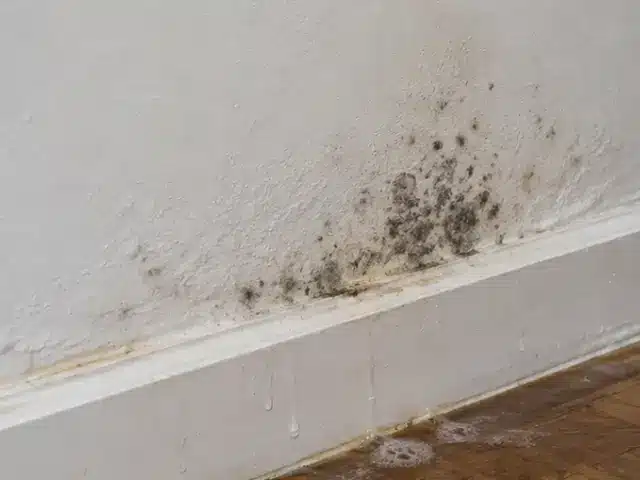
- Hidden slow leaks inside walls or under cabinets, found by stains, soft floors or a musty smell.
Why Seattle homes are caught off guard
Seattle doesn’t freeze often, so many homes have water lines in vented crawl spaces, unheated garages and exterior walls. When an Arctic cold snap settles over Puget Sound for a few days, those lines freeze and split. In January 2024 the Seattle Fire Department estimated about 175 burst-pipe calls in a few days, as covered in our guide to frozen and burst pipes in Seattle. Older homes add a second risk: aging supply lines and fittings that eventually fail.
What to do right now
- Shut off the main water valve. In most Seattle-area homes it is in the basement, crawl space or garage. For a water heater leak, also turn off its gas or power supply. If you’re a Seattle Public Utilities customer and can’t close the main, SPU’s 24/7 line at (206) 386-1800 can send a crew to shut it off at the meter for a service charge.
- Keep clear of electricity. If water is near outlets, the panel or a light fixture, stay out of that area.
- Call a plumber to repair the pipe before the water goes back on.
- Document it. Photograph the broken pipe or appliance, the water and damaged belongings.
- Call us so extraction and drying start the same day.
How burst pipe cleanup works
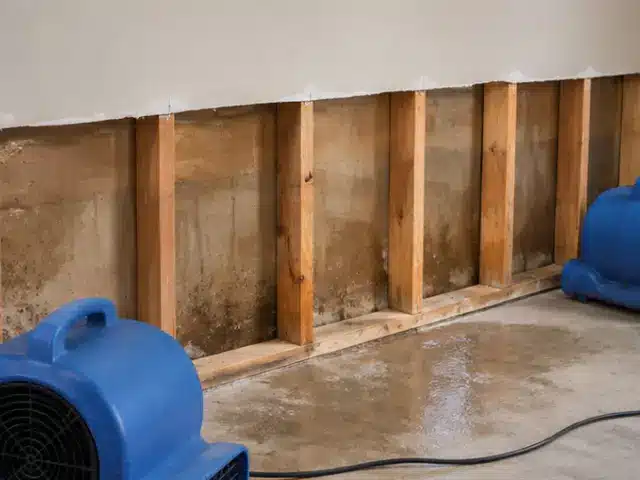
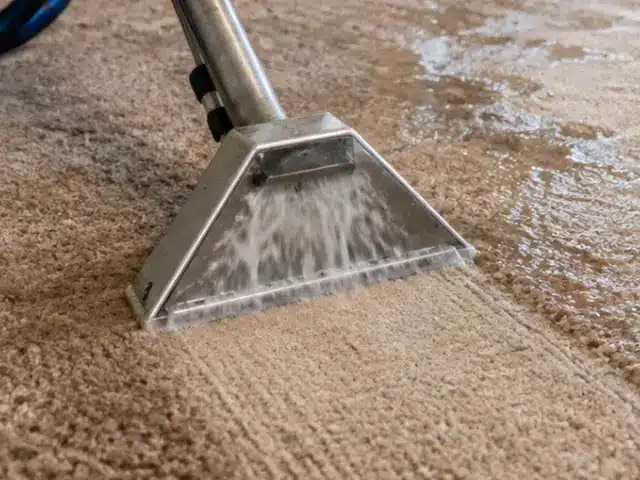
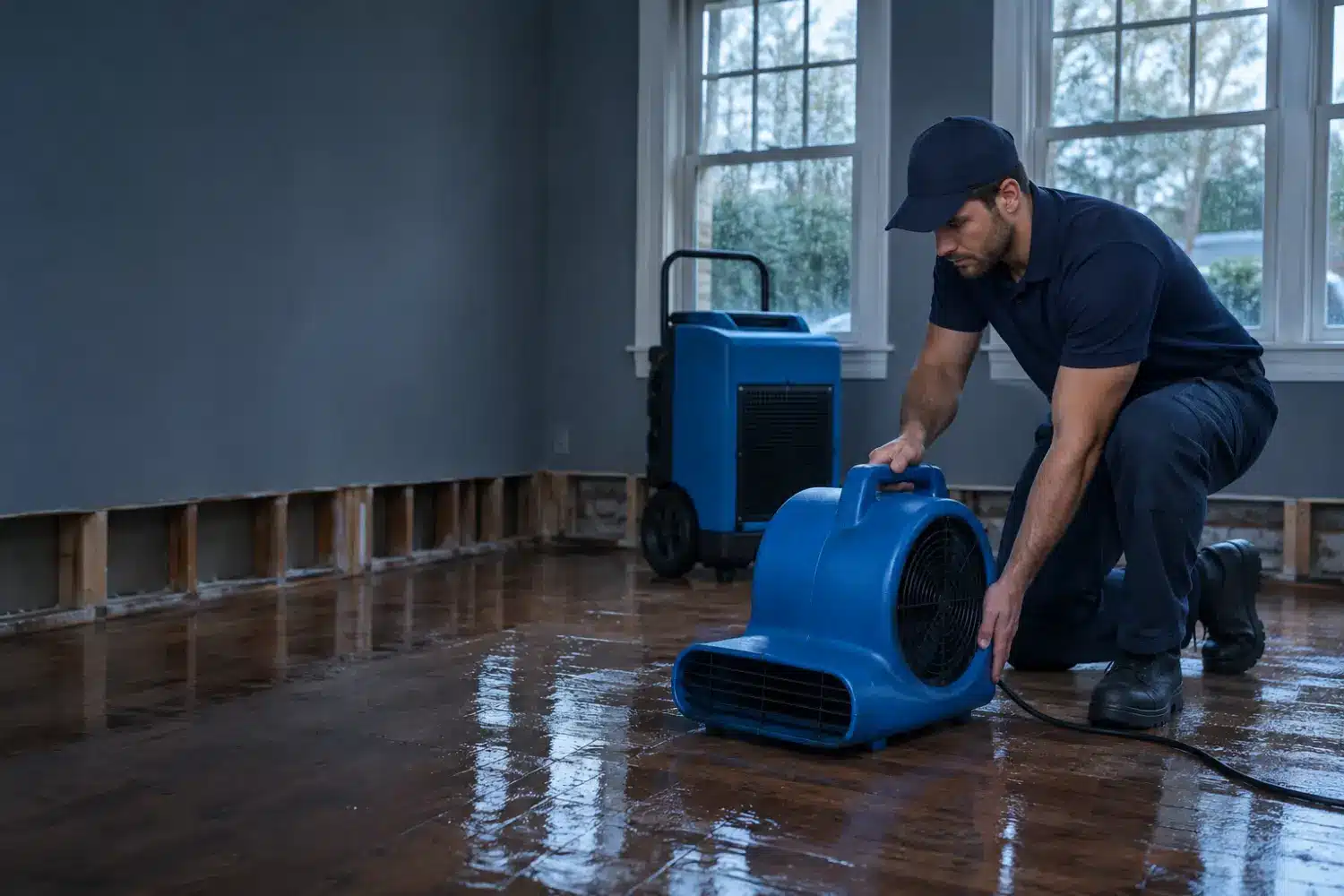
Pressurized leaks spread in three directions: across the floor, into the wall cavity and down to the level below. We map all three with moisture meters, then extract the standing water and pull water out of carpet and pad. Wet insulation, swollen baseboards and saturated drywall are removed where needed. Commercial dehumidifiers and air movers dry the framing and subfloor, and we take readings every day. The EPA advises drying water-damaged materials within 24 to 48 hours to prevent mold growth.
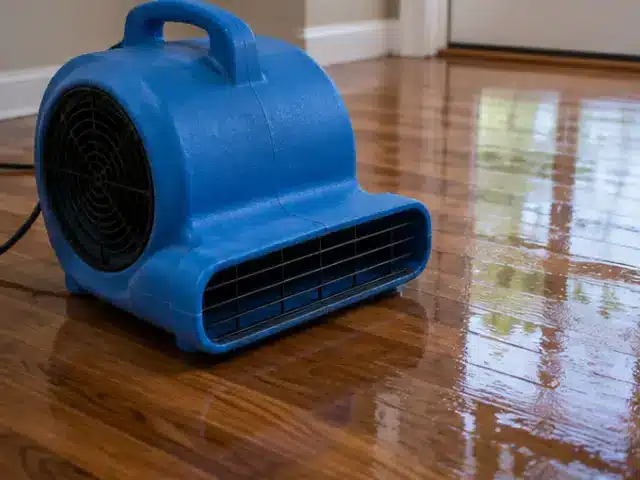
Some materials need extra attention. Hardwood floors can cup as they absorb water and are dried slowly to limit damage. Sink base cabinets often trap water under the toe kick, and laminate or vinyl plank can hold water underneath where it can’t be seen. We check each of these before deciding what stays and what is replaced.
If water came through a ceiling, see ceiling and drywall water damage repair. If the leak ran into the crawl space, see crawl space cleaning. All of this is part of our water damage restoration service.
We respond to burst pipe calls across Seattle, Federal Way, Tacoma and nearby cities. For questions about claims, see does homeowners insurance cover water damage in Washington.
Call (206) 203-6155 for burst pipe and leak cleanup, 24/7. Estimates are free.