In Seattle, the property owner is responsible for the side sewer, the private pipe that runs from the house to the public sewer main, and Seattle Public Utilities (SPU) is responsible for the main itself. So when sewage backs up into your home, who pays depends on where the blockage is: in your side sewer (usually roots, grease or something flushed that shouldn’t be), or in the city’s main. Either way, protect yourself from the sewage first, call a plumber and SPU at (206) 386-1800, and document the damage before cleanup. This guide explains the rules and the steps, based on SPU’s own guidance.
Sewage in your home right now? Keep people and pets away from it, turn off power to the area if you can do so safely, and call 911 Restoration of Seattle at (206) 203-6155. We answer 24/7, with an average response time of 45 minutes.
Who is responsible: your side sewer or the city main?
SPU describes a side sewer as “a privately owned sewer pipe.” If you own your home, you own it up to the public sewer pipe under the street near your home (SPU, Troubleshooting Your Sewer Problem). SPU’s side sewer page says the same: you own the side sewer all the way to the sewer mainline, which is SPU’s responsibility (SPU, Your Side Sewer). If several houses share one side sewer, the neighbors share maintenance and repair.
That split matters for cost. SPU says most side sewer backups are caused by tree roots, cooking oil and grease buildup, or objects other than toilet paper being flushed. Those are the owner’s problem. If the backup was caused by a problem in the City’s system, SPU says you can file a claim with the City for reimbursement of your costs.
How to tell where the problem is
A single slow sink or toilet usually means a clog in that fixture’s own drain. When the lowest drains in the house, such as a basement floor drain or a downstairs toilet, back up while water is running elsewhere, the blockage is further down the line, in the side sewer or the main. The way to know for sure is a camera inspection: SPU recommends hiring a plumber or sewer inspector to run a camera through the side sewer, and asking for a copy of the video. SPU can check whether the public main is the cause.
What to do when sewage backs up: SPU’s steps
- Protect people from contact with the sewage and turn off power to the affected area.
- Call a plumber to clear the line.
- Call Seattle Public Utilities at (206) 386-1800.
- Document the damage with photos and keep every invoice.
- Clean up promptly. If you do it yourself, wear protective boots and rubber gloves.
- Before anyone clears your side sewer, call Puget Sound Energy at 1-888-225-5773 so the work doesn’t damage a gas line.
Source: SPU, Troubleshooting Your Sewer Problem. Note that SPU does not enter homes to clean up sewage backups (SPU, Clean Up the Backup); cleanup inside the house is the owner’s job.
Cleaning up sewage safely
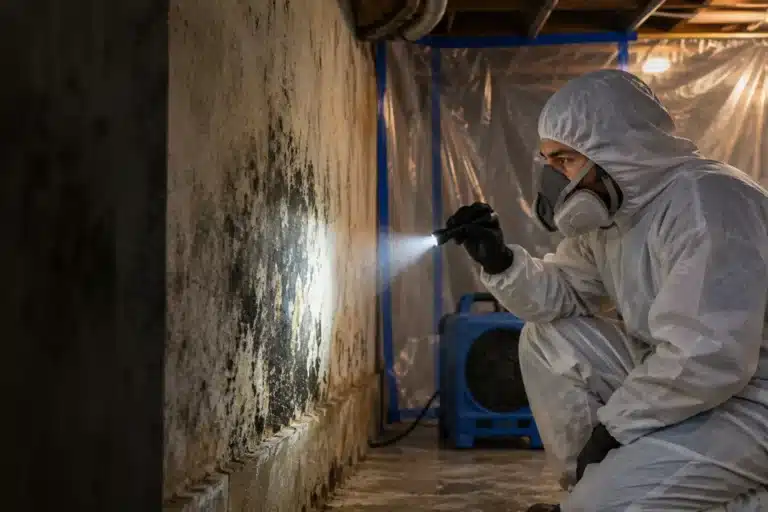
Sewage is Category 3 (“black”) water: it carries bacteria and other contaminants, and anything porous it soaks, such as carpet pad, drywall and insulation, usually has to be removed. SPU’s cleanup brochure suggests considering a professional cleaning company and lists the basics if you do it yourself:
- Turn off power to the flooded area and never use electrical equipment while standing in water.
- Turn off the gas to a furnace or water heater in the affected area.
- Avoid contact with sewage; wear long sleeves, rubber boots, gloves and eye protection.
- Wash, then disinfect hard surfaces, and never mix cleaners: bleach and ammonia together produce dangerous fumes.
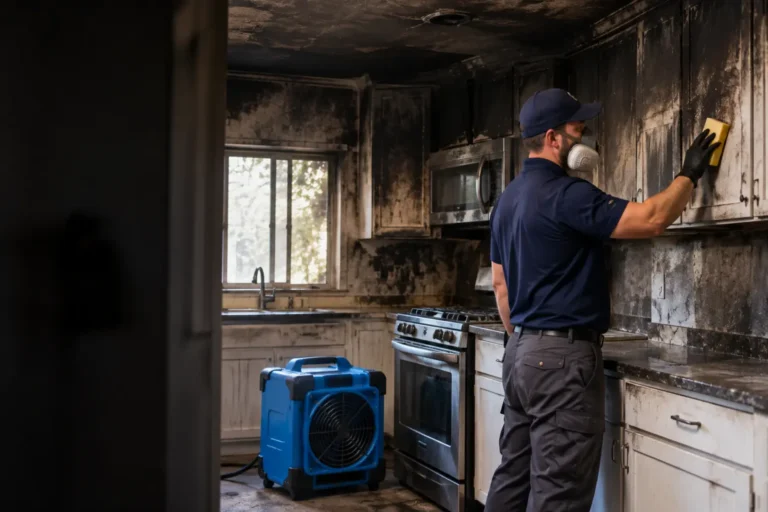
For anything beyond a small, contained spill, professional sewage backup cleanup removes contaminated materials, disinfects and dries the structure so odor and mold don’t follow. See also black water cleanup, toilet overflow cleanup and crawl space sewage cleanup.
Who pays for the damage?
- Your side sewer caused it: repairs to the pipe are yours. Cleanup inside the house may be covered by homeowners insurance, but many policies only cover sewer backup with an add-on endorsement. Check your policy, and read what homeowners insurance covers in Washington.
- The City main caused it: SPU says you can file a claim with the City for reimbursement. Keep photos, invoices and the plumber’s findings to support it.
What side sewer repairs cost in Seattle
SPU estimates that a side sewer repair that doesn’t require digging could range from $60 to $200 per foot, and that digging in the public right-of-way costs even more. Work in the right-of-way must be done by a contractor licensed and bonded to work in Seattle, and SPU recommends getting at least three written bids. Low- and moderate-income owners of single-family homes may qualify for a Home Repair Loan from the Seattle Office of Housing at (206) 684-0458 (SPU).
How to prevent the next backup
- Flush only toilet paper, and put cooking grease in the trash, not the drain (SPU, Side Sewer Maintenance).
- Have the side sewer cleaned regularly if you have large trees near the line, and get a camera inspection before buying a house.
- Ask a plumber whether a backwater valve makes sense for your basement. Backwater valves prevent sewage from flowing back into the building. SPU may fund one only when its staff verify that a backup was caused by the City system lacking capacity during storms, and the owner is then responsible for maintaining it (SPU policy DWW-351).
Outside Seattle?
These are Seattle Public Utilities rules. In Federal Way, Kent, Renton, Tacoma and other nearby cities, the sewer is run by a different city utility or sewer district, with its own phone numbers and rules, so check with yours. The cleanup is the same everywhere, and we handle sewage backups across King and Pierce County.
Need sewage cleanup now?
911 Restoration of Seattle removes sewage, takes out contaminated materials, disinfects and dries the structure, and documents everything for your insurer or a City claim. We work with most insurance companies and offer free estimates. Call (206) 203-6155, day or night.
Sources
- Seattle Public Utilities, Troubleshooting Your Sewer Problem (PDF)
- Seattle Public Utilities, Your Side Sewer
- Seattle Public Utilities, Side Sewer Maintenance
- Seattle Public Utilities, Clean Up the Backup (PDF)
- Seattle Public Utilities, Sewer-Backup Prevention: Backwater Valves, policy DWW-351 (2018, PDF)
Last reviewed November 10, 2026. General information only, not legal or insurance advice.